Twenty-seven places, thirteen routes and the practical detail that decides a trip: how far, how rough, how much, and when the ground is passable. Sourced, dated, and free of sales pitch.
562 tours · 91 operators · 27 destinations · Information as of 2026-09-21
01
Every Mongolia tour, in one place
Products published by 91 operators, with the days, the price as each company quotes it, and a link straight to their page. We sell nothing and take no commission.
The single most-sold Mongolian route: a loop through the South Gobi that strings together the ice-filled Yolyn Am gorge, the Khongoryn Els dune field and the red sandstone of Bayanzag, usually with a camel ride and a nomad-family visit built in. Operators sell it two ways — overland from Ulaanbaatar, which costs a long 8-9 hour driving day at each end, or with a domestic flight to Dalanzadgad that buys back roughly two days. Nights are in tourist ger camps with shared Western-style washblocks; the vehicle is a van or 4WD, not a coach. Four to six days is the normal length, and almost every operator warns that adding a day is better than compressing it.
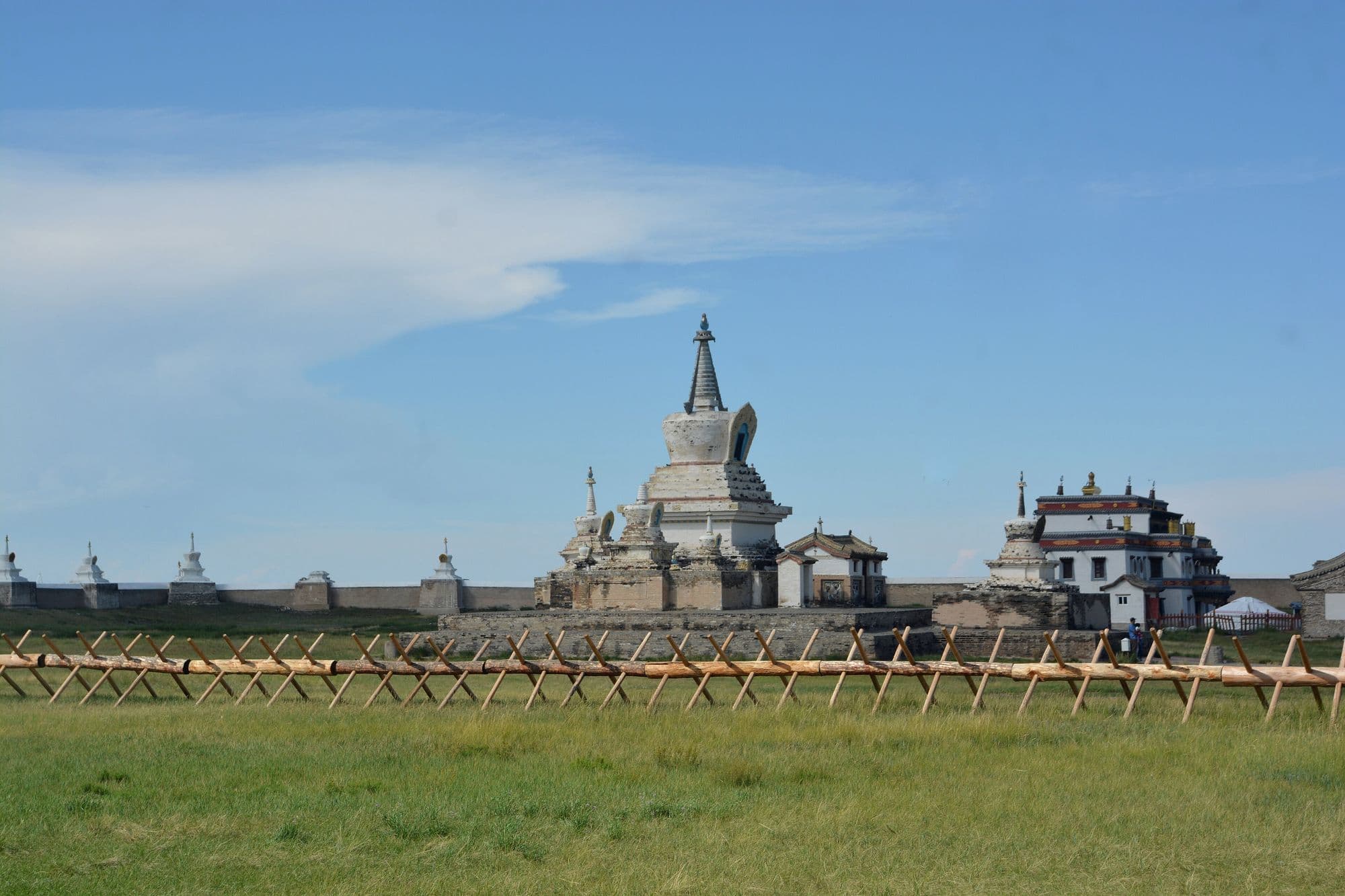
A short loop west and north of Ulaanbaatar that covers the imperial capital at Kharkhorin, the Erdene Zuu monastery, steppe lakes and the Przewalski's horse reserve at Khustai, with a sand-dune stop at Elsen Tasarkhai that gives a taste of desert without the Gobi's distances. It is the standard answer for travellers with five or six days who want history and grassland rather than desert. Roads are a mix of paved highway and dirt track, and daily stages are short by Mongolian standards. Most versions include a camel ride, a night or two of horse riding, and at least one nomad-family visit.
Mongolia's deep alpine lake in the far north, ringed by larch forest and mountains, reached either by a 1.5-hour flight to Murun or by two long driving days from Ulaanbaatar. Trips centre on the lakeshore itself: boating, hiking, horse riding along the water, and Bronze Age deer stones at Uushgiin Uvur near Murun. Short fly-in versions run three days; the more common shape folds Khuvsgul into a longer northern and central circuit of ten to thirteen days. It is the cool, green counterweight to the Gobi and the usual gateway for reindeer-herder side trips.
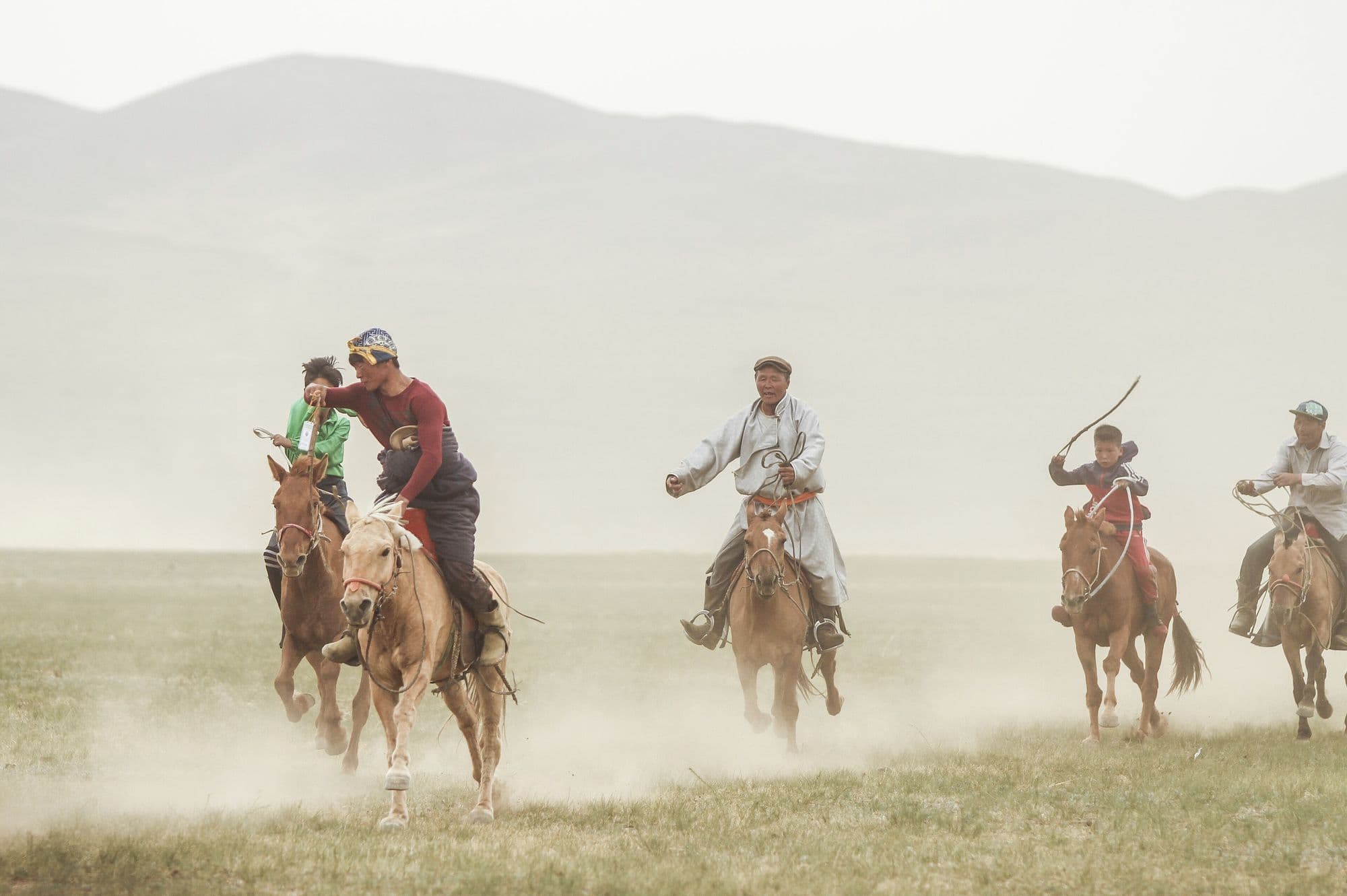
Mongolia's national festival, built on the three games of wrestling, horse racing and archery, and held from 11 to 13 July across the country; UNESCO inscribed it on the Representative List of the Intangible Cultural Heritage of Humanity in 2010. Tour versions pair the festival days in Ulaanbaatar or at a provincial Naadam with three or four days of countryside so the trip is not purely spectating. The horse races are held out of town on open steppe, not in the stadium, so itineraries usually split the days. Because dates are fixed, this is the one route where booking early genuinely matters.
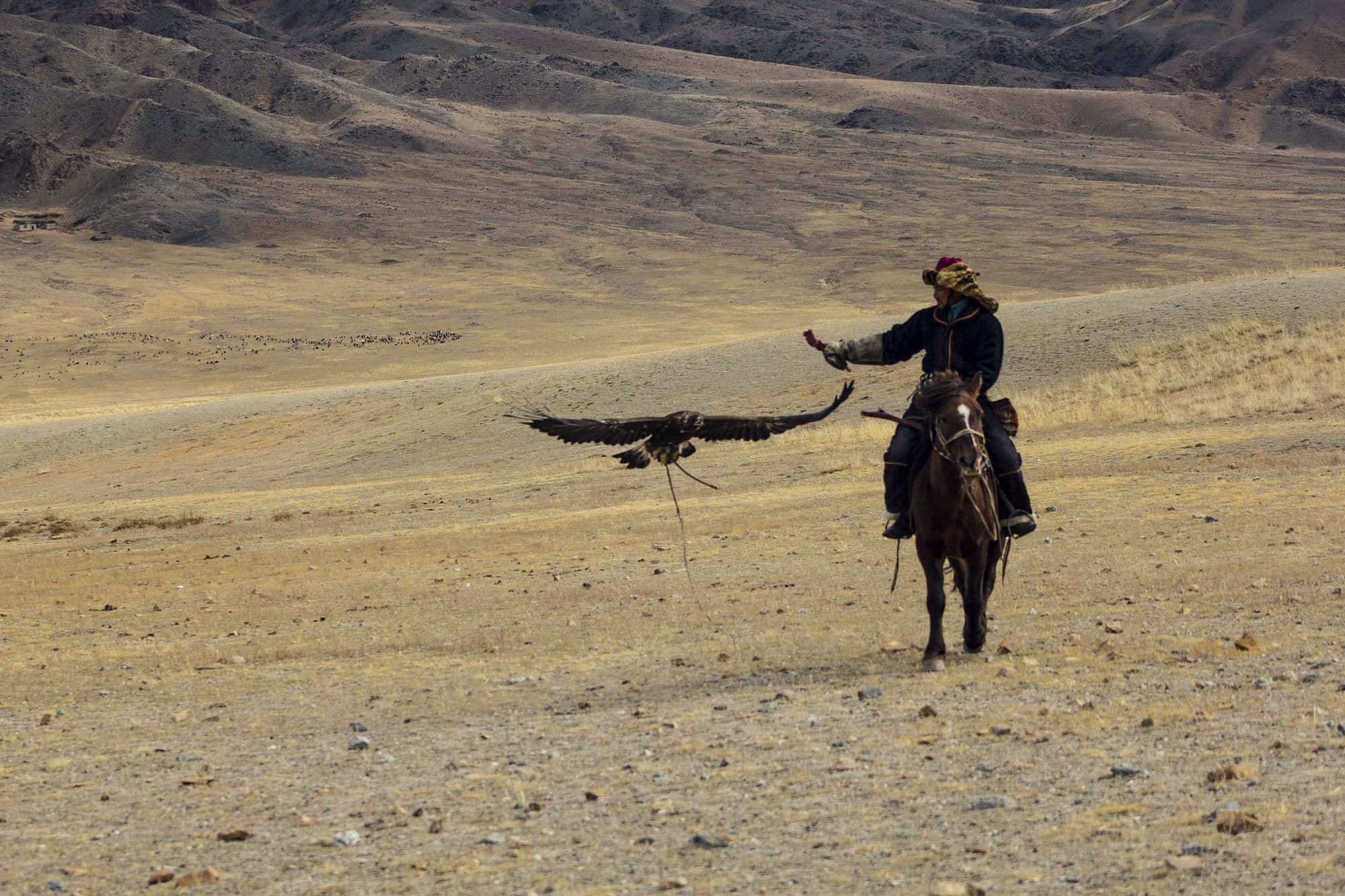
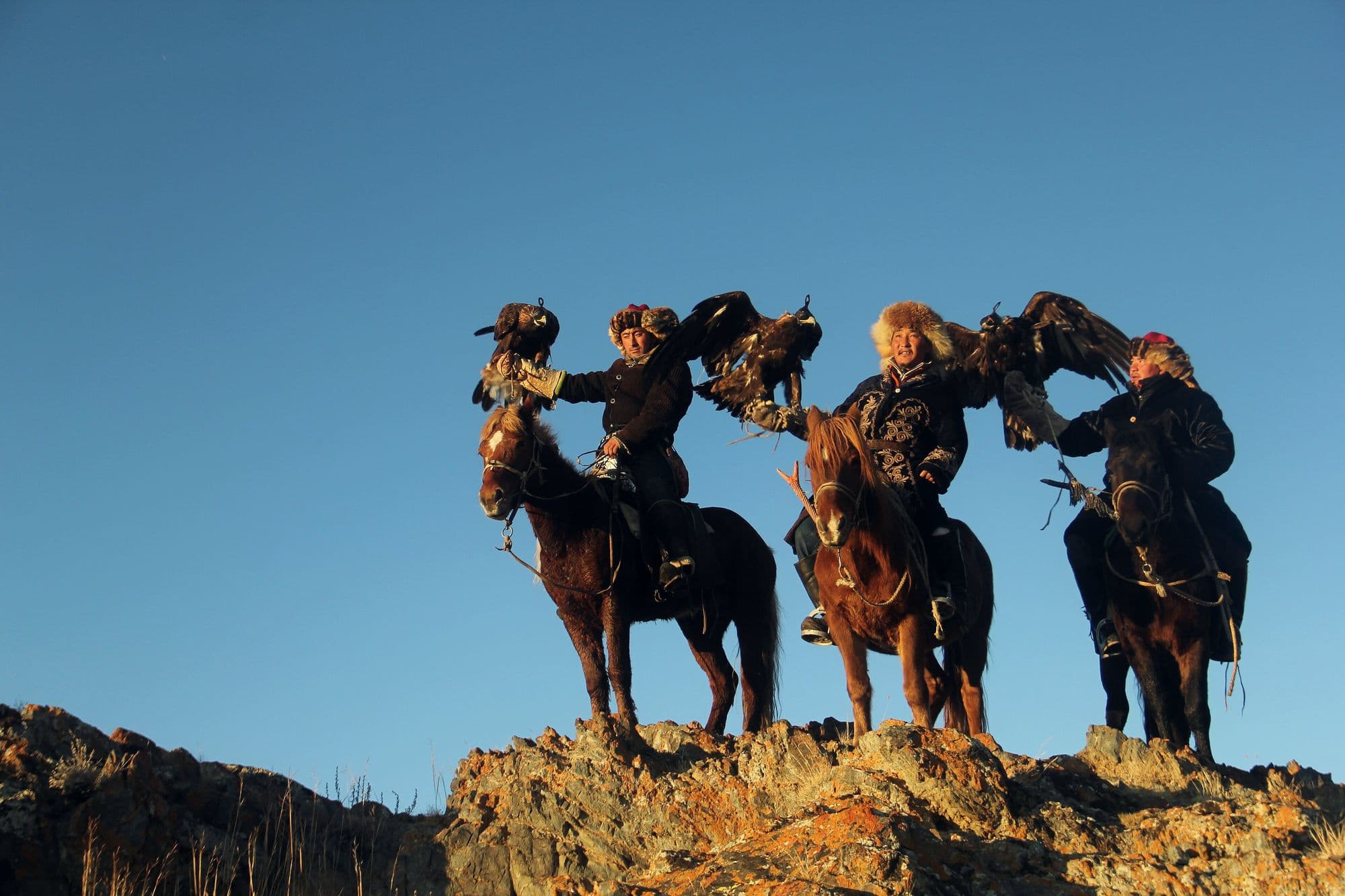
A trip to the far west, to Bayan-Olgii province, where Kazakh hunters compete with trained golden eagles in autumn. There are two distinct events: the Sagsai festival in September and the larger Olgii festival at the start of October, and operators sell separate departures for each. Every version flies from Ulaanbaatar to Olgii rather than driving, because the province is about 1,700 km from the capital. Around the festival days, itineraries add a stay with an eagle-hunting family and usually a day in Terelj on the Ulaanbaatar side.
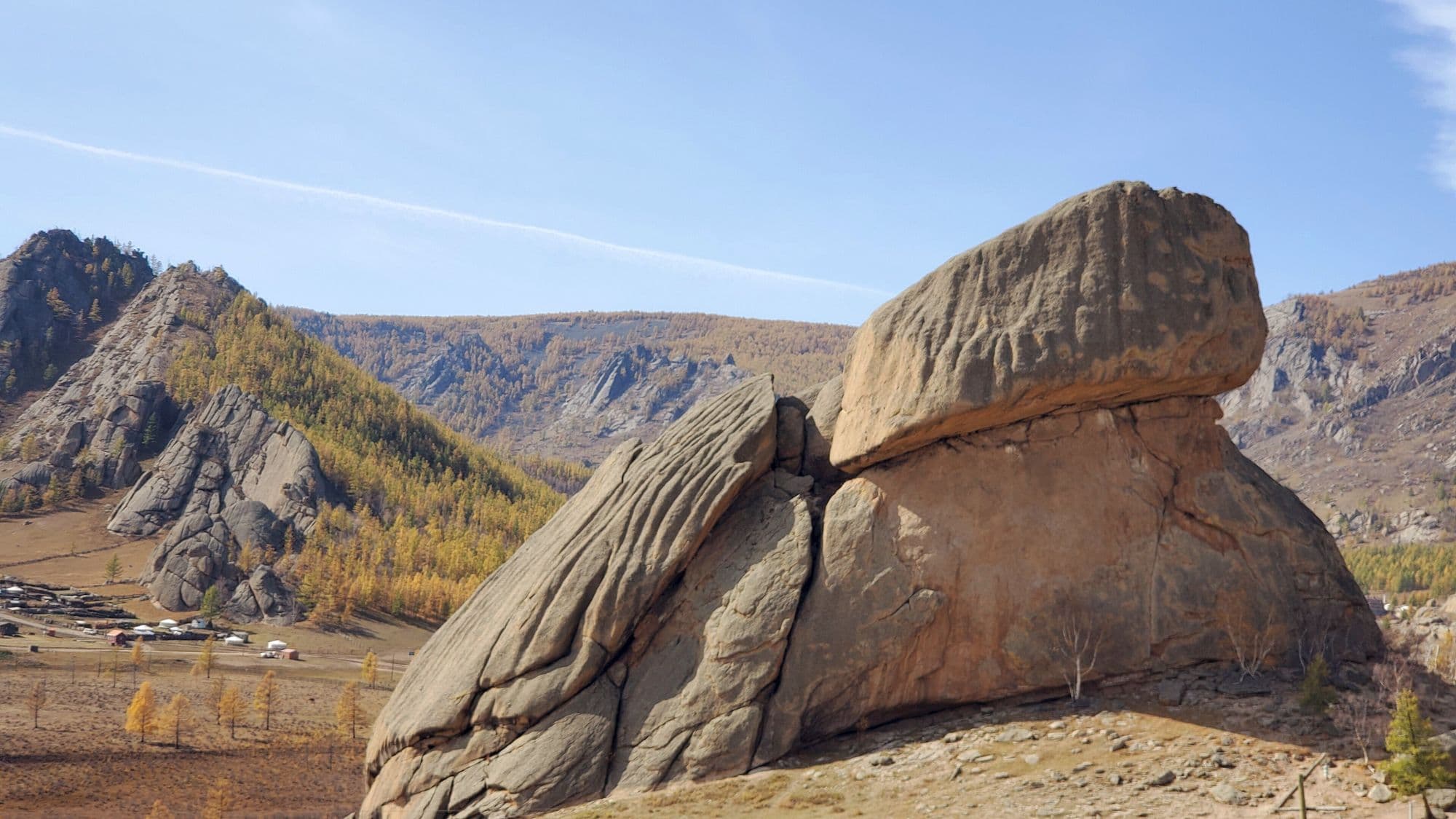
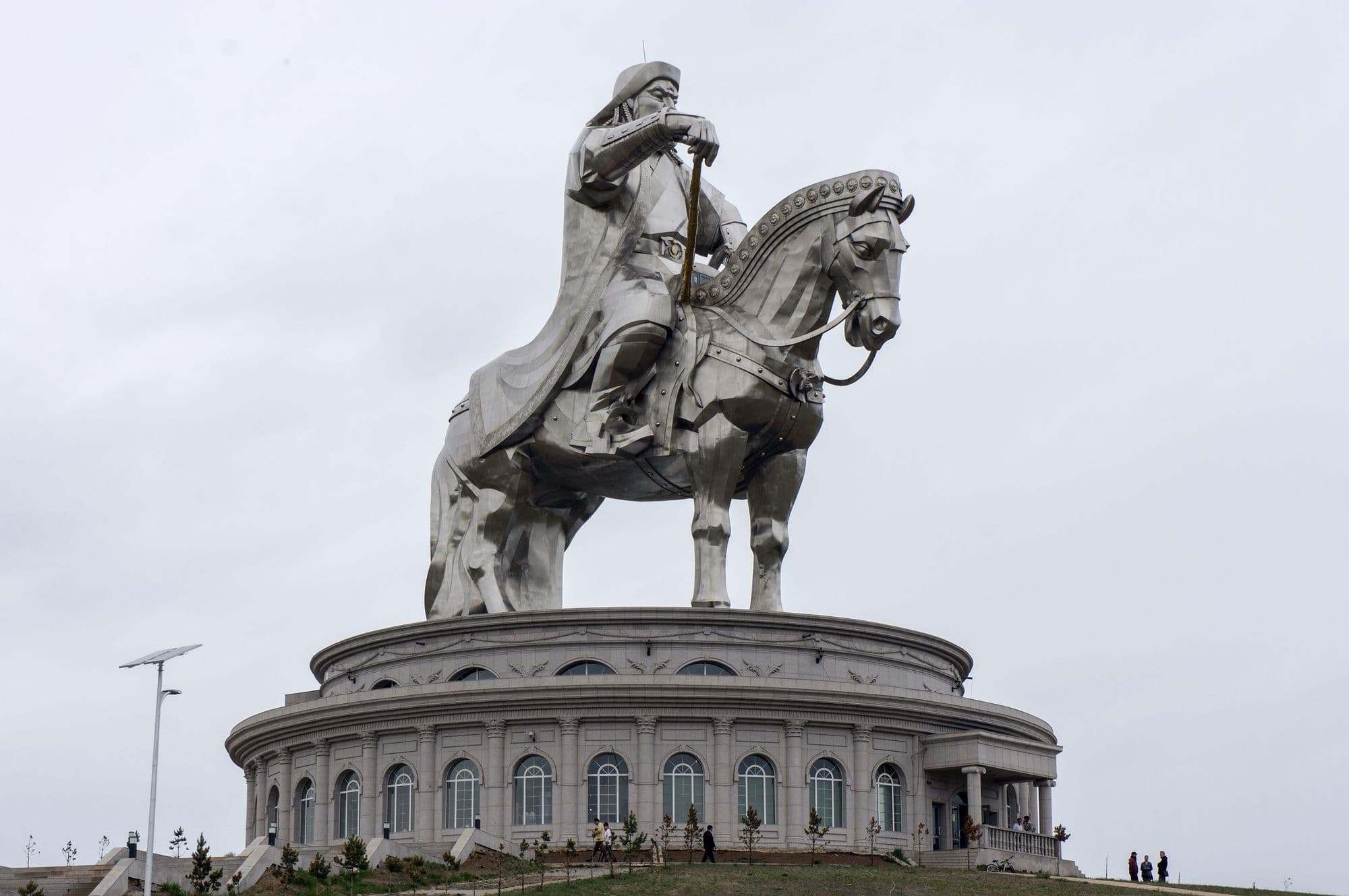
The two- to three-day trip almost every visitor with a stopover takes: the giant Chinggis Khaan equestrian statue on the road east, then Gorkhi-Terelj National Park for Turtle Rock, the Aryabal meditation temple and an hour in the saddle, with one night in a ger. Some versions swap in Khustai National Park for the Przewalski's horses or add a half-day hike on Bogd Khan mountain past the Manzushir monastery ruins. Distances are short and much of the road is paved, so it works as a weekend add-on rather than an expedition. It is also the cheapest way to sleep in a ger and see steppe.
Typical length
1–3 days
Best months
May–Sep
Per person, per day
170-200 USD
03
Put two side by side
Days, driving, season, price and what each one is not good for.
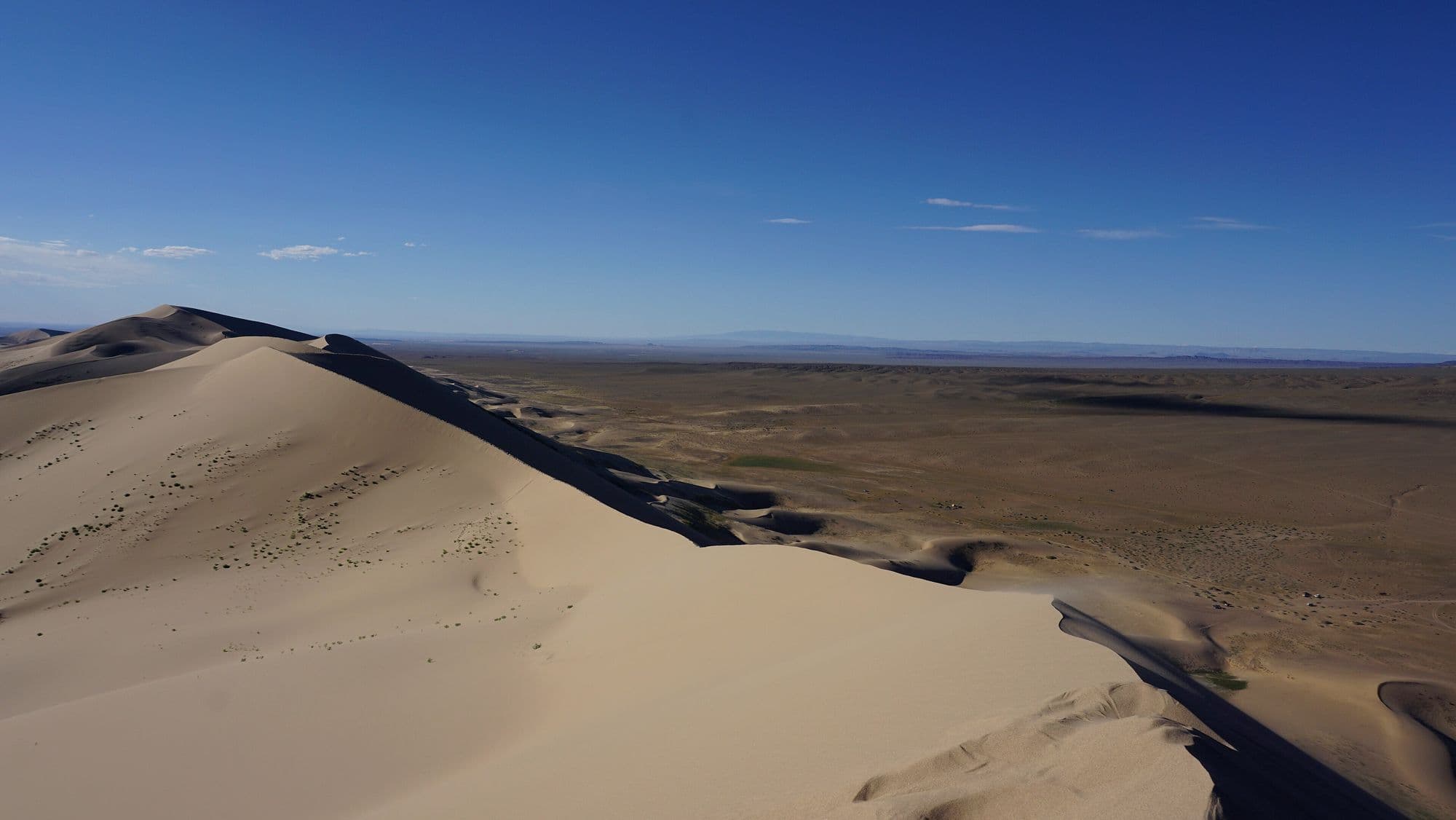
Khongoryn Els is the largest dune field in Mongolia, a band of sand running along the back of the Sevrei and Zöölön ranges with crests that rise as much as 300 m above the plain. Its nickname comes from the low droning hum the sand makes as grains slide and rub against each other on a windy day. The contrast is what makes it: bare rock mountains to the south, a wall of sand in the middle, and on the north side a green ribbon of oasis where the Khongoryn Gol stream surfaces and nomad families graze camels. Climbing the high dune for sunset is the standard reason people come, and it is much harder work than it looks.
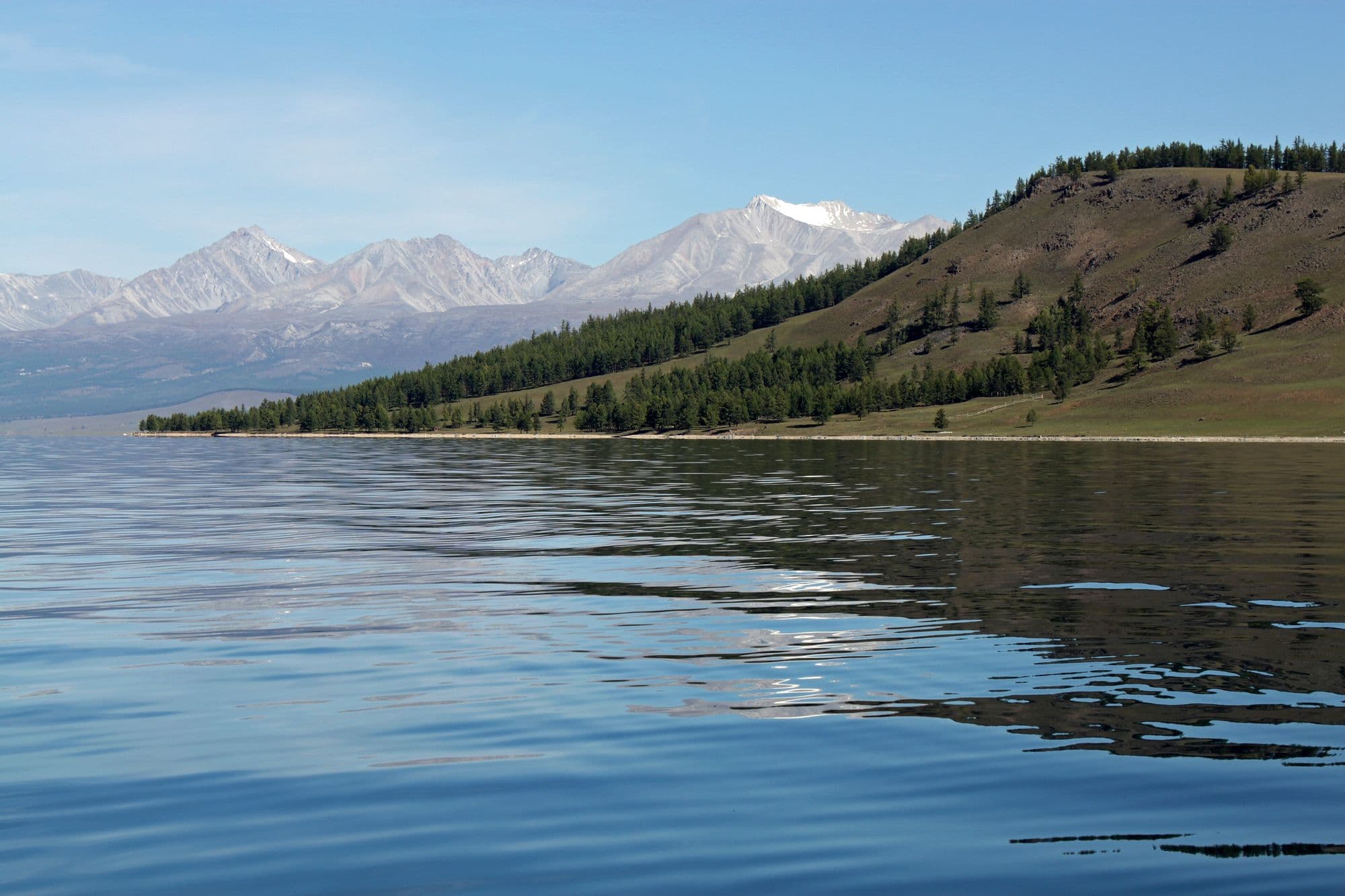
Khuvsgul is a deep, cold, exceptionally clear mountain lake in Mongolia's far north, set against the larch and cedar forests that mark the start of the Siberian taiga. It is more than two million years old, reaches 267 m deep, and stores roughly 70 percent of Mongolia's fresh water and about 0.4 percent of the world's. Most visitors base themselves at Khatgal at the southern end and spend their days riding, walking or boating along the shoreline, staying in ger camps built among the trees. Because the road from Ulaanbaatar is paved the whole way and flights land at Murun, it is the easiest place in Mongolia to combine forest, water and reindeer-herding culture in one trip.
Terelj is the closest thing to real mountain country within an easy drive of Ulaanbaatar: weathered granite tors, larch and birch on the north-facing slopes, and the Terelj river winding through meadows in the south-western foothills of the Khentii. The park's name comes from the words for creek and rhododendron. Only a small southern strip is developed, with dozens of tourist ger camps, horse and camel hire, restaurants and souvenir stalls; beyond the Gorkhiin Davaa pass most of the park is roadless. It is the standard first or last night of a Mongolia trip, and the best place to try a ger without committing to two days in a van.
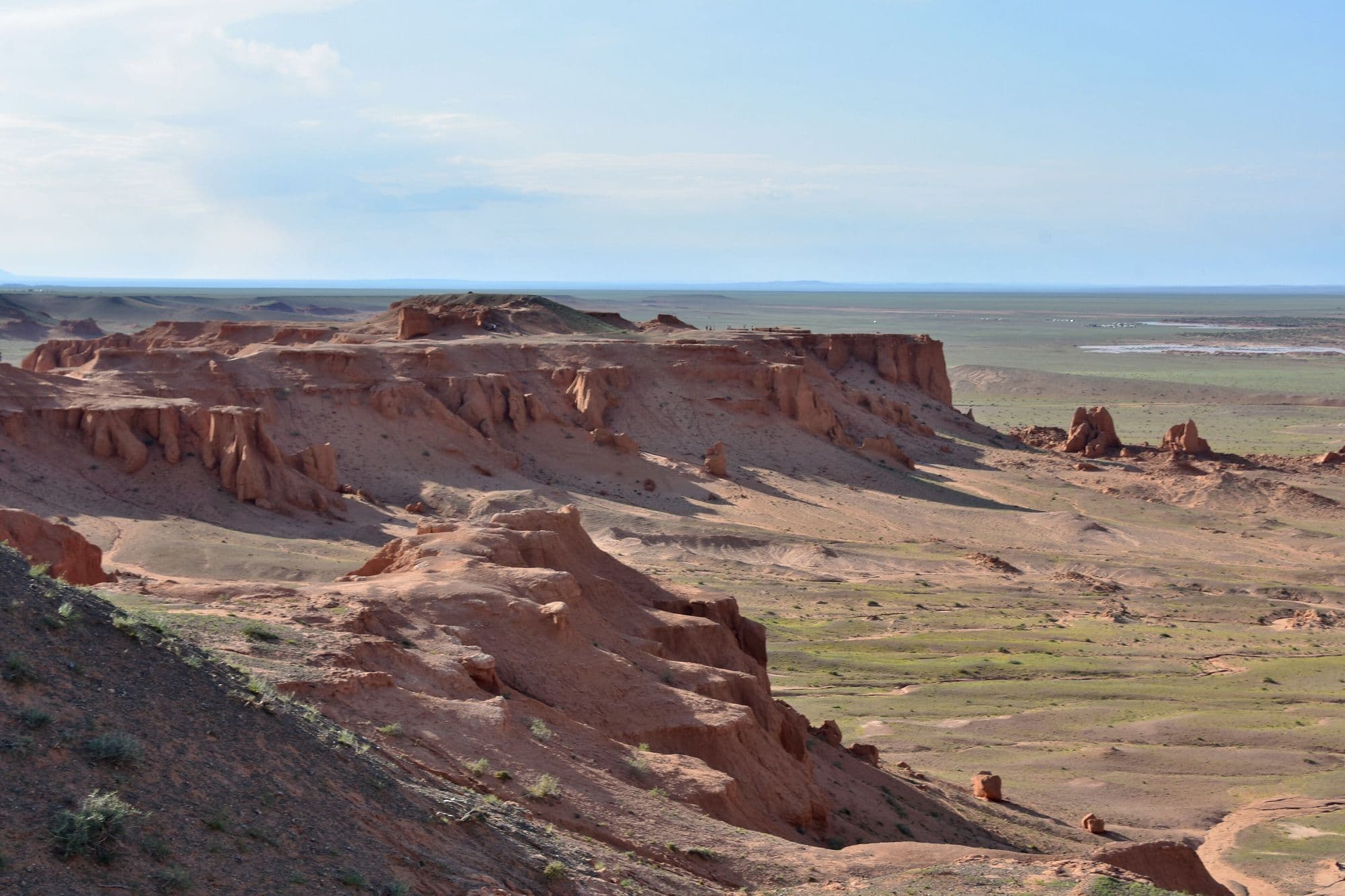
Bayanzag is a line of orange sandstone cliffs and badlands on the edge of a saxaul woodland, and it is the single most important site in the history of dinosaur palaeontology in Asia. Roy Chapman Andrews of the American Museum of Natural History named it the Flaming Cliffs in the 1920s for the colour the rock turns at sunset, and it was here that the first scientifically recognised dinosaur eggs were found. The rock belongs to the Djadochta Formation, which has also produced Velociraptor, Protoceratops, Oviraptor and some of the earliest known placental mammals. Visiting means walking the rim and the gullies below, which is a short and easy stop, and it is almost always timed for late afternoon.
Kharkhorin sits at the lower end of the upper Orkhon valley, where the easternmost Khangai foothills meet open steppe. Just north of the modern town lie the ruins of Karakorum, briefly the imperial capital of the Mongol Empire under Ögedei Khan and the city William of Rubruck described in 1254. Built partly out of its stones in 1585, Erdene Zuu is probably the oldest surviving Buddhist monastery in Mongolia, a walled compound edged with stupas holding a handful of Chinese- and Tibetan-style temples and one working temple that still serves the town. Both sit inside the Orkhon Valley Cultural Landscape World Heritage Site.
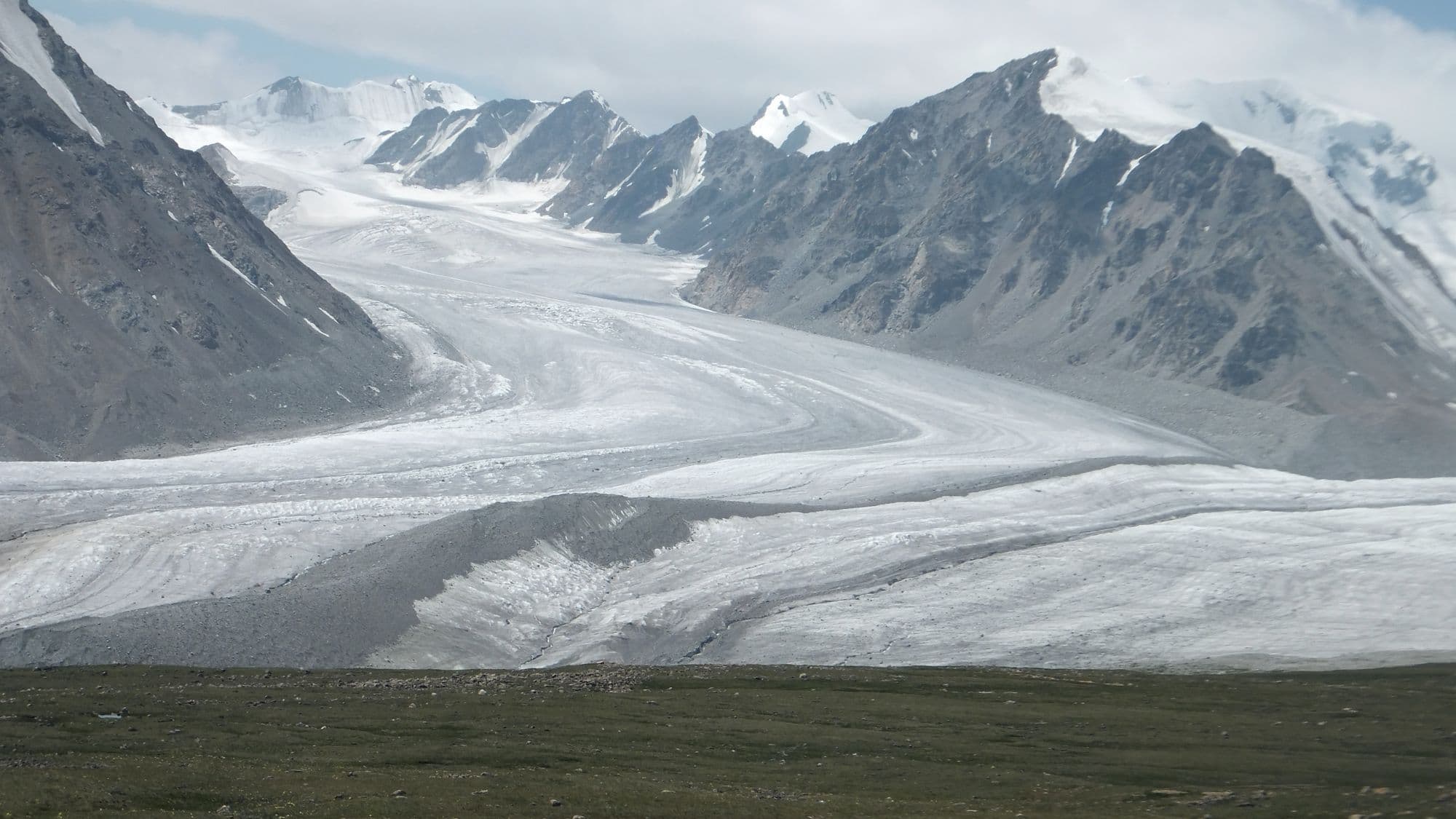
Altai Tavan Bogd protects Mongolia's highest corner, a 6,362 km2 block of glaciated peaks, cold blue lakes and Kazakh and Tuvan summer pastures against the Russian and Chinese borders. Its centrepiece is the Tavan Bogd, the 'Five Saints' massif, topped by Khuiten Peak on the Mongolia-China boundary, with the Potanin Glacier - Mongolia's longest at about 14 km - running below it. South of the peaks the freshwater lakes Khoton, Khurgan and Dayan sit in wide valleys used by herding families, and the Tsagaan Salaa valley holds thousands of Bronze Age rock carvings inscribed by UNESCO. Nothing here is quick: reaching the base camp means a long day on dirt from Olgii, and the mountain itself needs guides, permits and crampons.
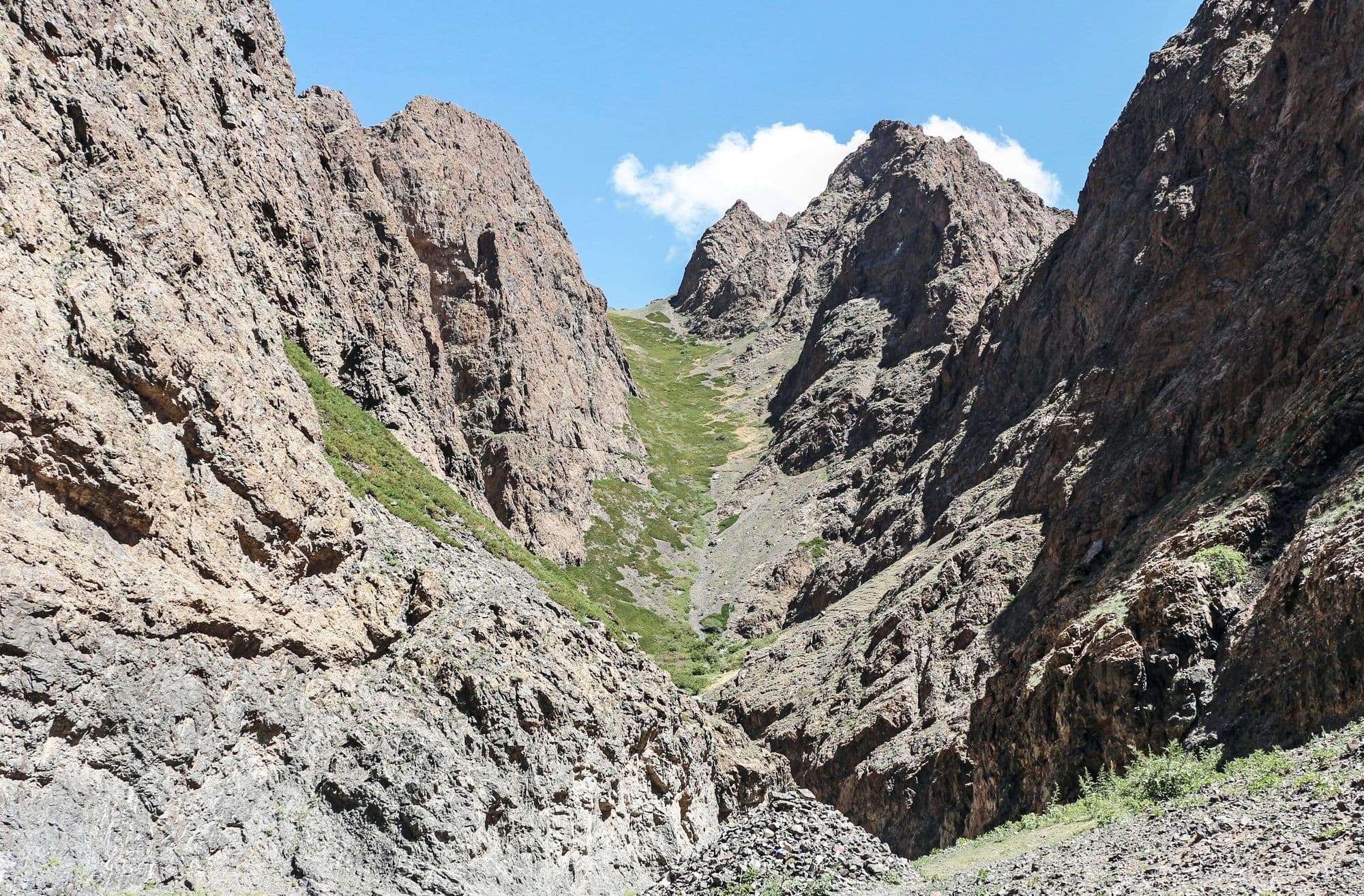
Yolyn Am is a narrow gorge cut into the Zuun Saikhan range inside Gobi Gurvansaikhan National Park, and it is the one place in the South Gobi where the desert stops feeling like desert. The walls close to a few metres apart, a stream runs along the floor, and for much of the year a sheet of ice sits in the shaded narrows. It is named after the yol, the bearded vulture that nests on the cliffs above. Visitors park at the mouth, pass a small natural history museum, and walk or ride a horse a few kilometres up the valley to the ice.
Bayan-Olgii is Mongolia's only Kazakh-majority province, and the practice that defines it is hunting foxes and hares from horseback with a trained golden eagle. Around 250 active eagle hunters are counted in the province, and two autumn festivals - a smaller one at Sagsai in September and the main Golden Eagle Festival near Olgii in early October - bring them together to be judged on how their birds fly to the fist, how they take a lure, and on their costume and kit. Around the festivals the province is worth days in its own right: mosques and bazaars in Olgii, Kazakh embroidery and felt-work, and family gers with an eagle on a block outside. The real hunting season, though, runs through the winter, from about mid-October to the end of February.
Best months
Sep–Oct
05
When to go
Monthly normals for four parts of the country, plus the festival calendar.
Ulaanbaatar
Monthly climate
High
Low
Rain
Jan
-15.5°
-25.6°
2.1 mm
Feb
-9.4°
-21.7°
2.8 mm
Mar
-0.2°
-12.6°
4.6 mm
Apr
10.4°
-3.3°
8.4 mm
May
17.8°
3.5°
21.7 mm
Jun
23.1°
10.3°
47.2 mm
Jul
25.2°
13.5°
74.5 mm
Aug
23°
11.1°
65.4 mm
Sep
17.2°
4.1°
27.9 mm
Oct
7.7°
-4.5°
8.6 mm
Nov
-4.8°
-15.1°
6.3 mm
Dec
-13.7°
-22.9°
3.5 mm
Festivals
National Naadam Festival
11-13 July 2027 for the festival itself; public holidays 11-15 July 2027 (Sunday to Thursday). Horse racing heats begin in the days before the 11th.
Ulaanbaatar. Opening ceremony, wrestling and the closing at the National Sports Stadium; archery and knuckle-bone shooting at the adjacent archery and shagai grounds; horse racing out of town at Khui Doloon Khudag on the steppe west of the city.
Golden Eagle Festival
Expected 2-3 October 2027, being the first weekend of October.estimated
Bayan-Ölgii Province, western Mongolia. The 2026 edition is listed at Bugat village near Ölgii; events have also historically run in central Ölgii and on the steppe about 4 km outside the town.
Khuvsgul Lake Ice Festival
Expected around 1-3 March 2027. Unconfirmed.estimated
On the frozen surface of Lake Khuvsgul at the southern end, at or near Khatgal. One operator locates the festival ground at Khar-Us, north of Khatgal. Nearest airport is Mörön, then roughly 100 km by road.
Tsagaan Sar (Mongolian Lunar New Year)
Bituun 6 February 2027 (Saturday); first day of Tsagaan Sar 7 February 2027 (Sunday); public holidays 7-9 February 2027.estimated
Nationwide, and above all inside homes. There is no public spectacle to attend; the holiday is a sequence of family visits.
This directory describes; it does not rate. Entries come from each operator’s own published pages. Check prices and terms with the operator before booking.