Bayan-Olgii (Баян-Өлгий аймаг)· Баян-Өлгийн казах бүргэдчид, бүргэдийн баяр
Bayan-Olgii Kazakh eagle hunters and the eagle festivals
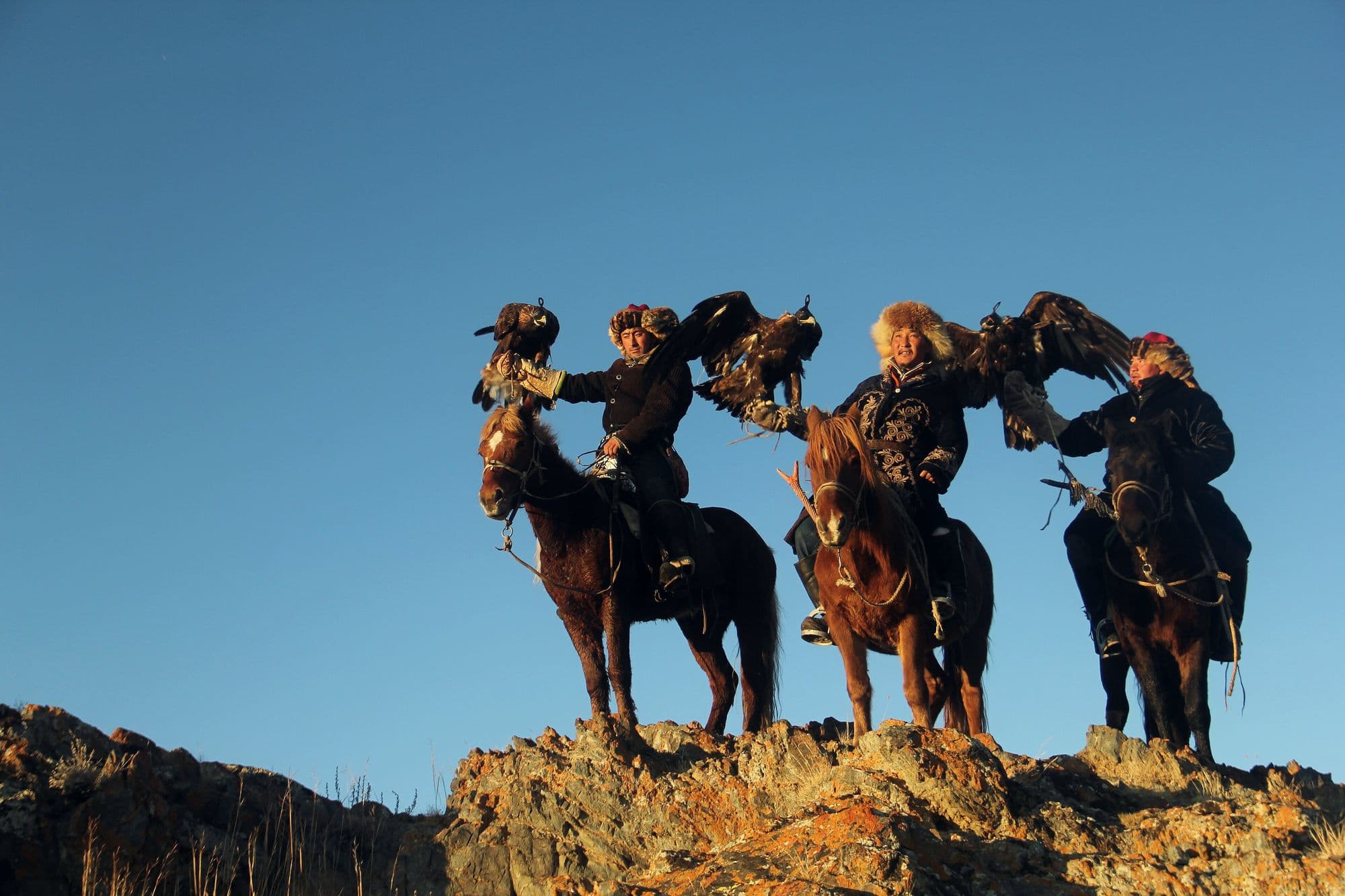
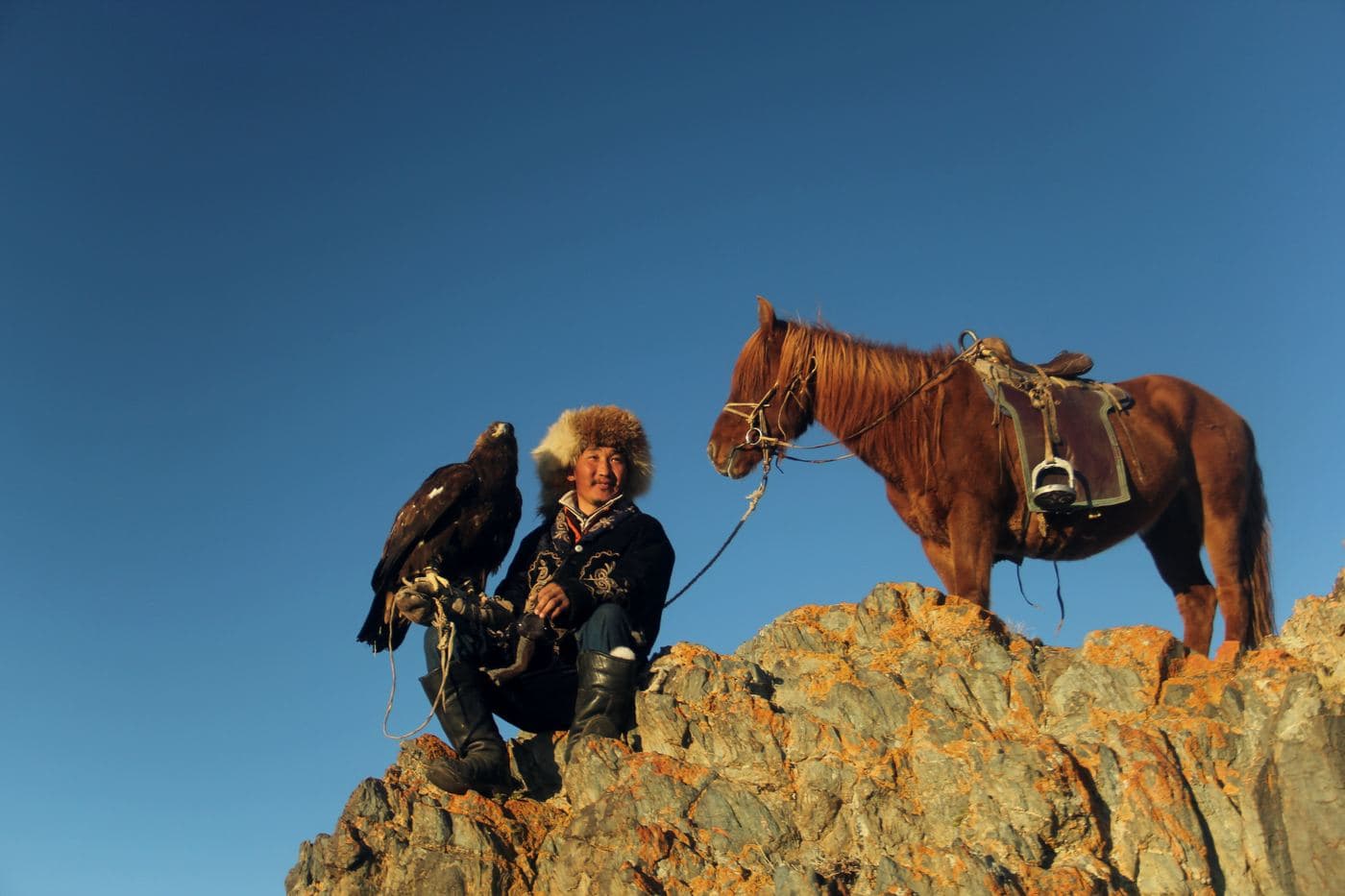
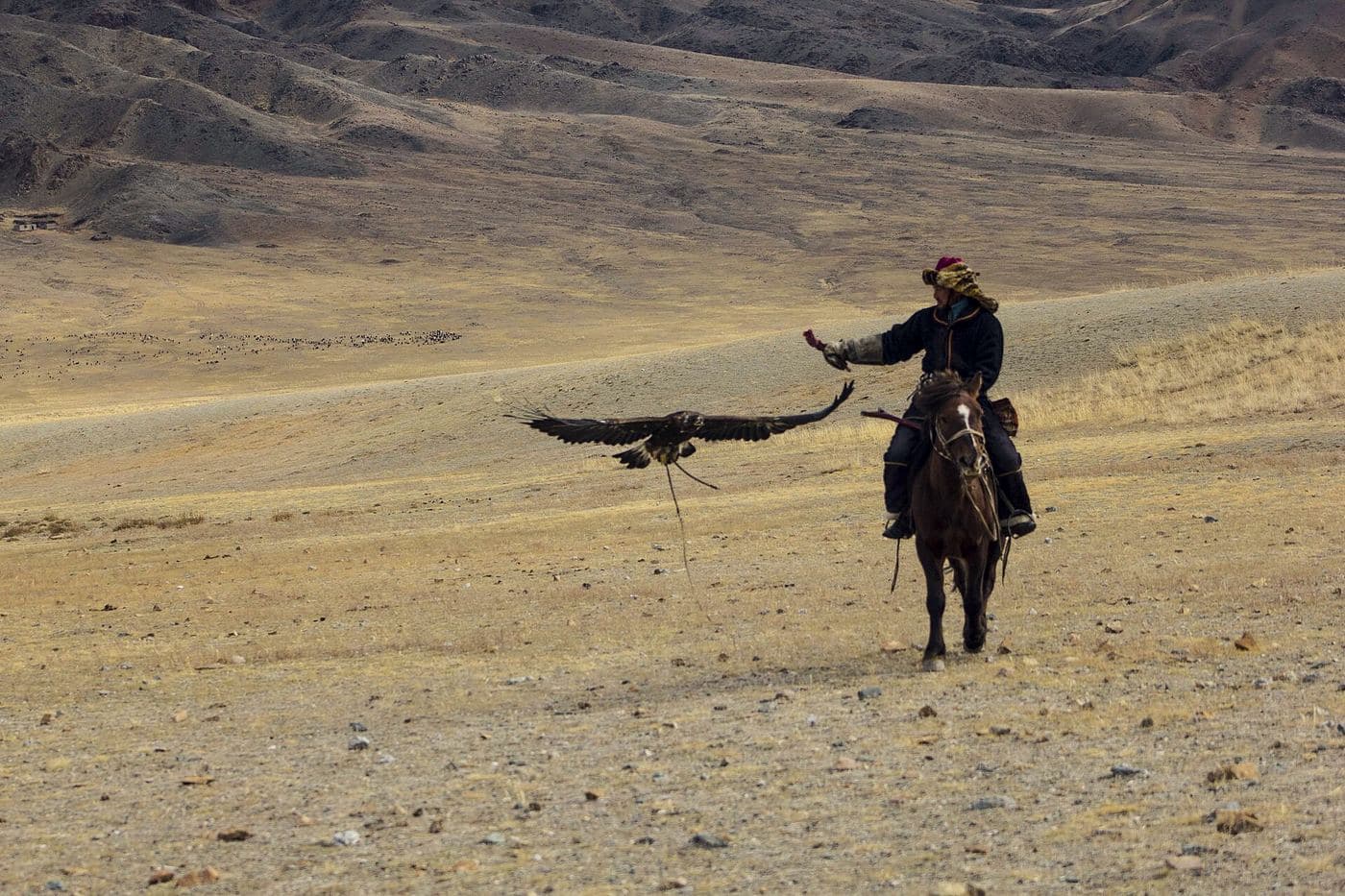
Bayan-Olgii is Mongolia's only Kazakh-majority province, and the practice that defines it is hunting foxes and hares from horseback with a trained golden eagle. Around 250 active eagle hunters are counted in the province, and two autumn festivals - a smaller one at Sagsai in September and the main Golden Eagle Festival near Olgii in early October - bring them together to be judged on how their birds fly to the fist, how they take a lure, and on their costume and kit. Around the festivals the province is worth days in its own right: mosques and bazaars in Olgii, Kazakh embroidery and felt-work, and family gers with an eagle on a block outside. The real hunting season, though, runs through the winter, from about mid-October to the end of February.
- From Ulaanbaatar
- 1,620 km
- Drive time
- About 21 hours of driving spread over 2-3 days; the scheduled bus takes at least 30 hours and 36-48 is commonly quoted
- Altitude
- 1,710 m
- Typical stay
- 4-6 nights, more if combining with Altai Tavan Bogd
- Best months
- Sep–Oct
- Jan: not a best month
- Feb: not a best month
- Mar: not a best month
- Apr: not a best month
- May: not a best month
- Jun: not a best month
- Jul: not a best month
- Aug: not a best month
- Sep: a best month
- Oct: a best month
- Nov: not a best month
- Dec: not a best month
Highlights
- The Golden Eagle Festival near Olgii on the first weekend of October, with around 70 hunters taking part
- The Altai Kazakh Eagle Festival at Sagsai on the third weekend of September, a smaller field of about 40
- Judging rounds where eagles are released from a ridge and called down to the hunter's fist
- Kokpar (bushkashi), the horseback goatskin tug-of-war, plus horse racing and archery
- Kazakh dress and hunting kit: fox-fur tumak hats, embroidered coats, decorated gauntlets and hoods
- Olgii's mosques, including the Abu-Bakr Siddiq central mosque, and the Kazakh bazaar
- Staying with an eagle-hunting family and watching a bird fed and handled at home
- Winter hunting trips on horseback in the Altai foothills, from mid-October to the end of February
Season notes
September and October are the point of the trip: Sagsai's festival on the third weekend of September, the Golden Eagle Festival near Olgii on the first weekend of October. Flights and beds sell out for both, so book months ahead. The genuine hunting season is mid-October to the end of February, which is when a homestay trip shows the birds working rather than performing, at the cost of very hard cold - Olgii's record low is about -40 C. June to August is good for the mountains and lakes but the eagles are moulting and resting, so expect to see birds rather than hunting. Ger camps generally run May-October only.
From Ulaanbaatar
Mostly paved Ulaanbaatar to Olgii but exceptionally long - routing engines return about 1,619 km. Wikivoyage notes the daily bus leaves at 13:00 and costs 80,000 MNT. Outside Olgii city there are effectively no paved roads, so any trip to a hunter's camp or the festival grounds is on dirt.
By air
Flying is the sensible option: Olgii Airport (ULG) has several flights a week from Ulaanbaatar, more in summer, on Aero Mongolia among others, plus irregular services to Khovd, Ulaangom, Murun and Almaty. Wikivoyage warns that summer and festival-period flights sell out and should be booked early.
Where to stay
- Olgii hotels: simple rooms about 30,000 MNT, semi-deluxe about 45,000 MNT, deluxe about 60,000 MNT per night (Wikivoyage, retrieved September 2026)
- Ger camps open roughly May-October: about USD 20 single, USD 10 per person for a double, USD 5-7 per person in three-bed and larger gers; prices rise during the festivals (Wikivoyage, retrieved September 2026)
- Homestays with Kazakh families in Sagsai, Altai and Tsengel sums, arranged through local operators; rates are negotiated rather than published
Be aware
Sources (6)
- Olgii (city) - Wikipedia — 1,710 m elevation, population about 50,126 in 2024, record temperatures -40 C to 35.8 C, mosques, Golden Eagle Festival in October, airport links, 3-times-weekly bus
- Bayan-Olgii Province - Wikipedia — 93% Kazakh population, about 80% of the world's eagle hunters, Golden Eagle Festival in October with around 70 hunters, Olgii Airport services
- Golden Eagle Festival - Wikipedia — Judging categories (best eagle at hunting prey, response to handler, traditional attire), horse racing, archery and bushkashi, the Sagsai festival each September with about 40 participants, the term burkitshi
- Olgii - Wikivoyage (via MediaWiki API extract) — Festival dates and entry prices (USD 30 Sagsai third weekend of September, USD 40 Golden Eagle Festival first weekend of October), 250 active eagle hunters, hotel and ger camp prices, bus 80,000 MNT from 13:00, park permit 3,000 MNT, dry Friday
- Western Mongolia - Wikivoyage (via MediaWiki API extract) — Eagle hunting season mid-October to end of February, daily or near-daily flights to Olgii, Khovd, Ulaangom and Uliastai, bus times of 36 hours to Olgii
- OSRM driving distance table from Ulaanbaatar — About 1,619 km and 21 hours of driving from Ulaanbaatar to Olgii
Often combined with
Altai Tavan Bogd National Park
Bayan-Olgii · 1,620 km
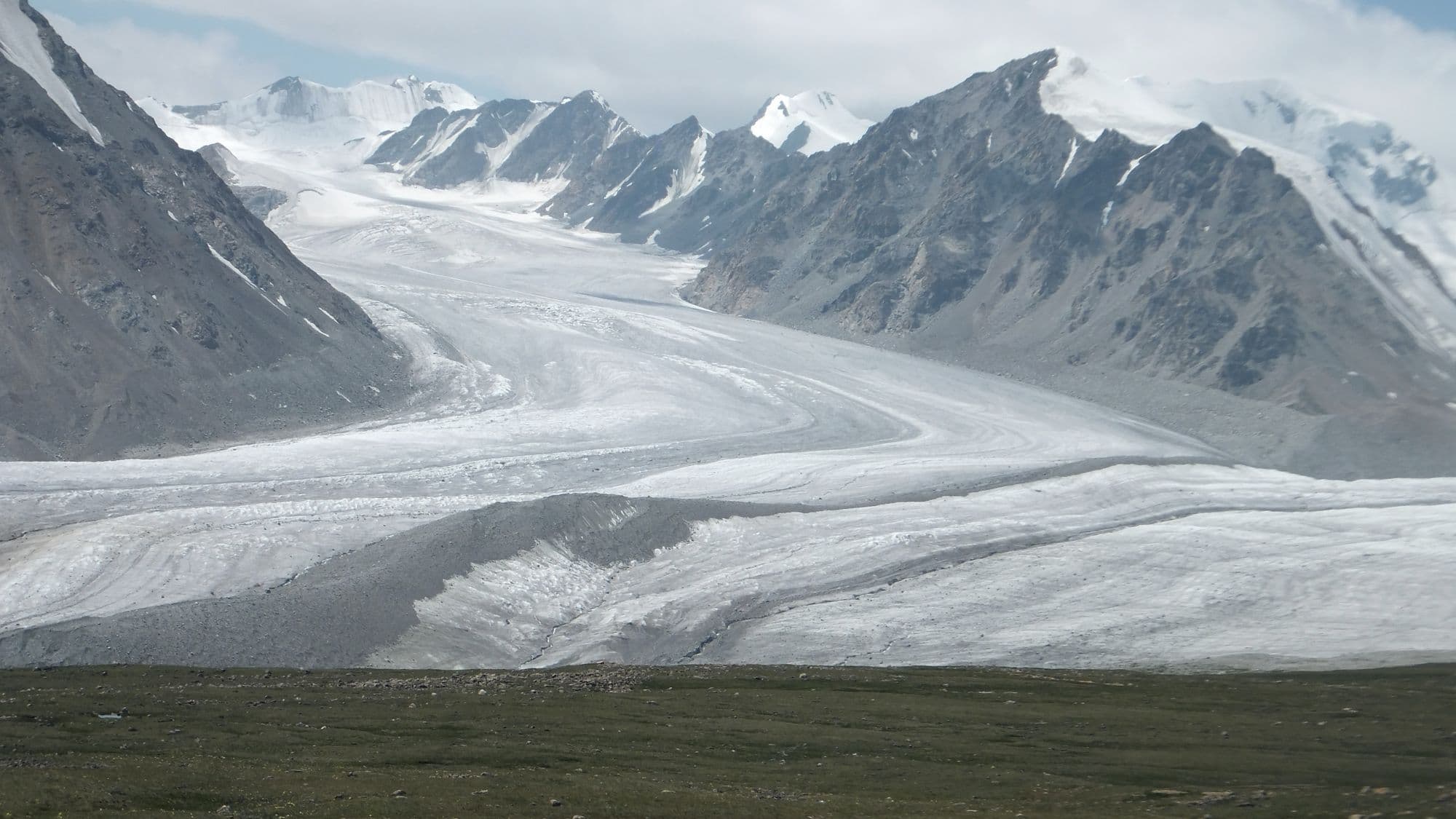
Altai Tavan Bogd protects Mongolia's highest corner, a 6,362 km2 block of glaciated peaks, cold blue lakes and Kazakh and Tuvan summer pastures against the Russian and Chinese borders. Its centrepiece is the Tavan Bogd, the 'Five Saints' massif, topped by Khuiten Peak on the Mongolia-China boundary, with the Potanin Glacier - Mongolia's longest at about 14 km - running below it. South of the peaks the freshwater lakes Khoton, Khurgan and Dayan sit in wide valleys used by herding families, and the Tsagaan Salaa valley holds thousands of Bronze Age rock carvings inscribed by UNESCO. Nothing here is quick: reaching the base camp means a long day on dirt from Olgii, and the mountain itself needs guides, permits and crampons.
- Best months
- Jun–Sep
Uvs Lake (Uvs Nuur) and its UNESCO basin
Uvs · 1,370 km
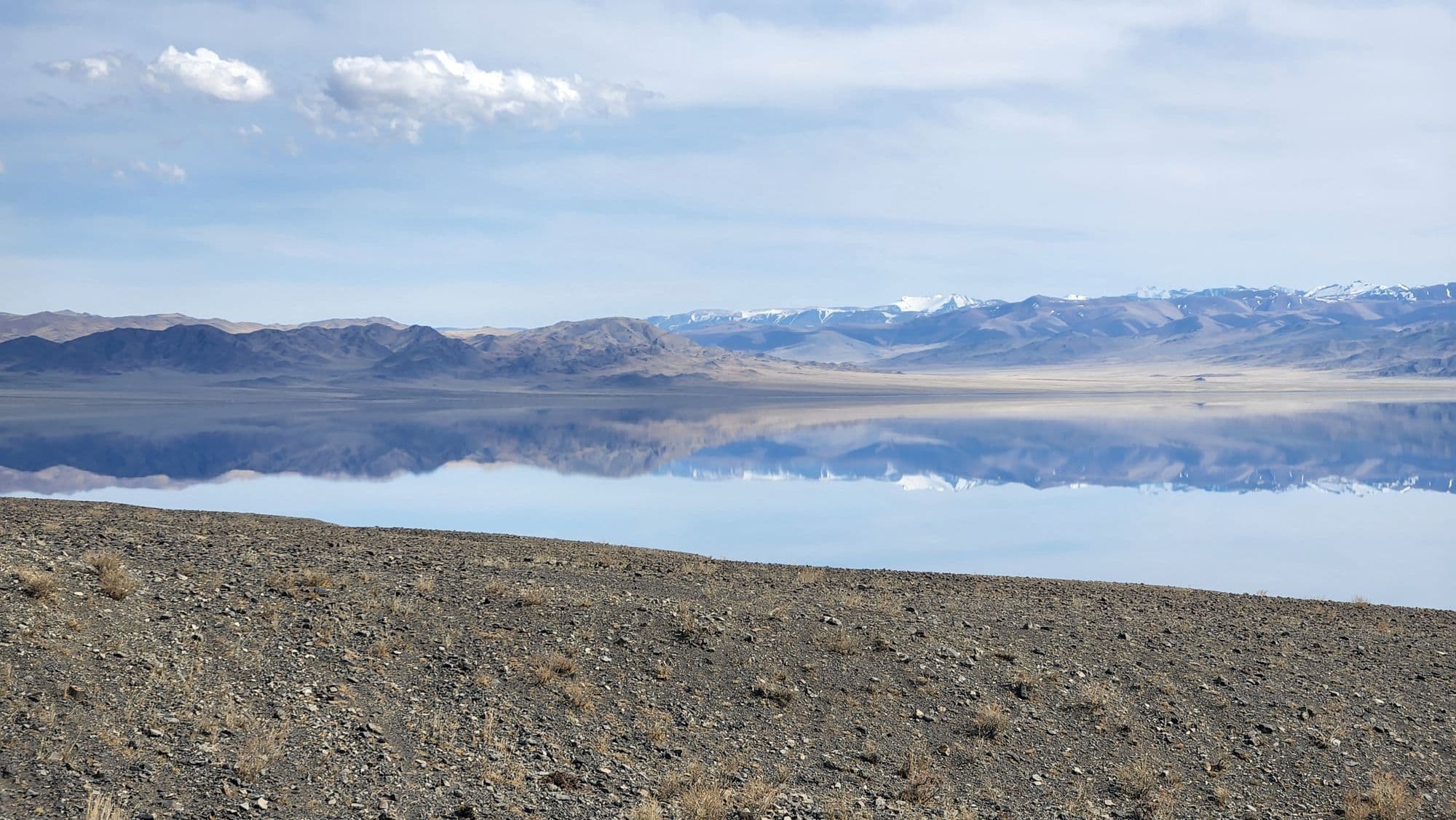
Uvs Nuur is Mongolia's largest lake by surface area, a shallow, intensely salty sheet of water at 759 m that has no outlet and sits at the centre of a transboundary basin shared with Russia's Tuva. The basin was inscribed on the UNESCO World Heritage List in 2003 and added to the Ramsar list in 2004, because within one catchment it holds desert dunes, salt marsh, steppe, taiga, tundra and glaciated mountains, and is one of the last remnants of the mammoth steppe. Practically, visitors base themselves in Ulaangom and drive out to the shore for birdlife and the extraordinary emptiness, then head south-west into the Kharkhiraa and Turgen mountains for walking and horse trekking. It is one of the least visited corners of Mongolia, and also one of the harshest: the basin has recorded both -58 C and +47 C.
- Best months
- Jun–Sep