Töv (the developed tourist zone is administratively in Nalaikh district of Ulaanbaatar municipality; the protected area north of the Terelj river lies in Töv aimag)· Горхи-Тэрэлжийн байгалийн цогцолборт газар
Gorkhi-Terelj National Park
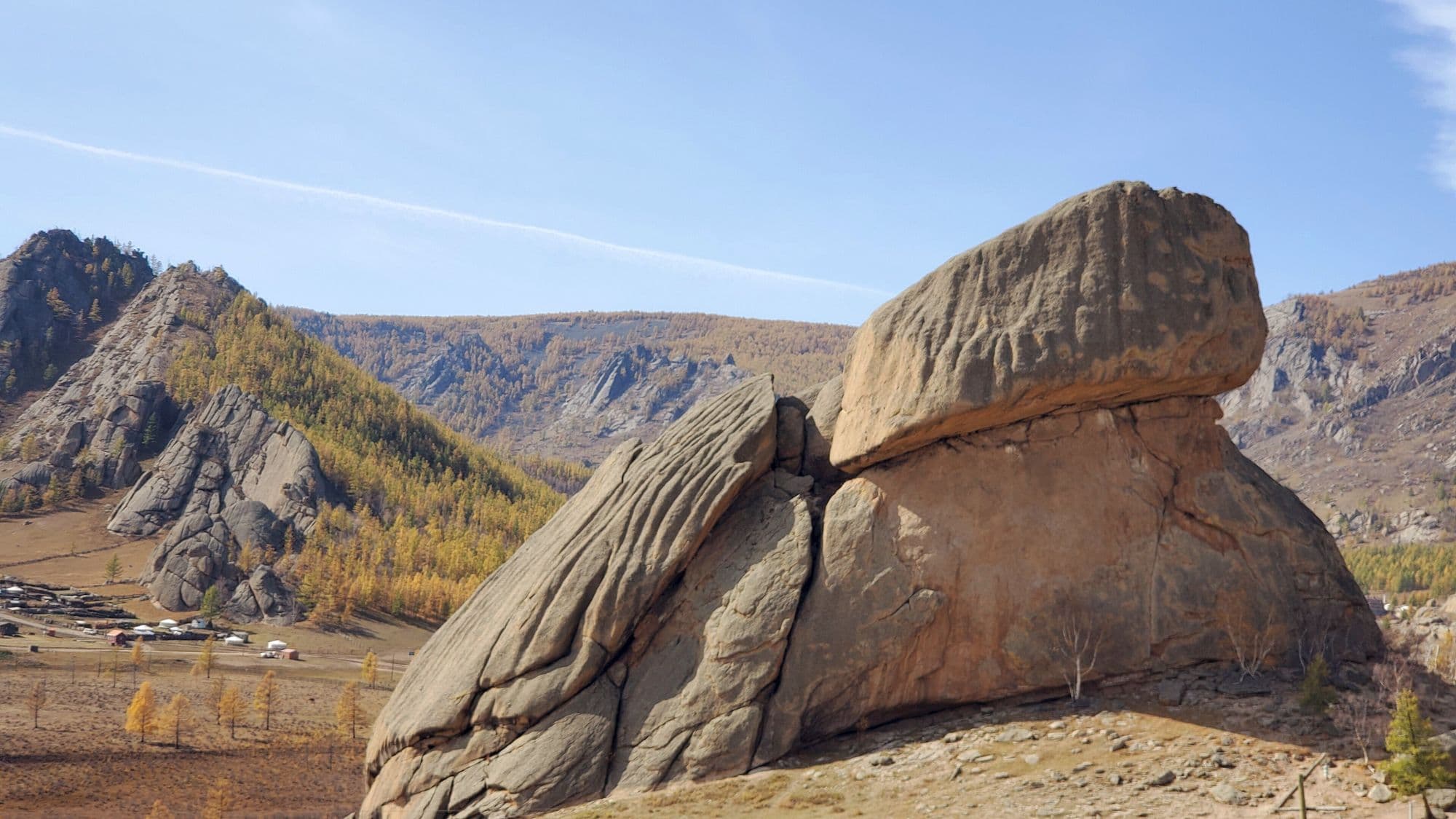
Terelj is the closest thing to real mountain country within an easy drive of Ulaanbaatar: weathered granite tors, larch and birch on the north-facing slopes, and the Terelj river winding through meadows in the south-western foothills of the Khentii. The park's name comes from the words for creek and rhododendron. Only a small southern strip is developed, with dozens of tourist ger camps, horse and camel hire, restaurants and souvenir stalls; beyond the Gorkhiin Davaa pass most of the park is roadless. It is the standard first or last night of a Mongolia trip, and the best place to try a ger without committing to two days in a van.
- From Ulaanbaatar
- 56 km
- Drive time
- 1-1.5 by car to Turtle Rock; about 1.5-2 to Terelj village
- Altitude
- 1,542 m
- Typical stay
- 1-2
- Best months
- Jun–Sep
- Jan: not a best month
- Feb: not a best month
- Mar: not a best month
- Apr: not a best month
- May: not a best month
- Jun: a best month
- Jul: a best month
- Aug: a best month
- Sep: a best month
- Oct: not a best month
- Nov: not a best month
- Dec: not a best month
Highlights
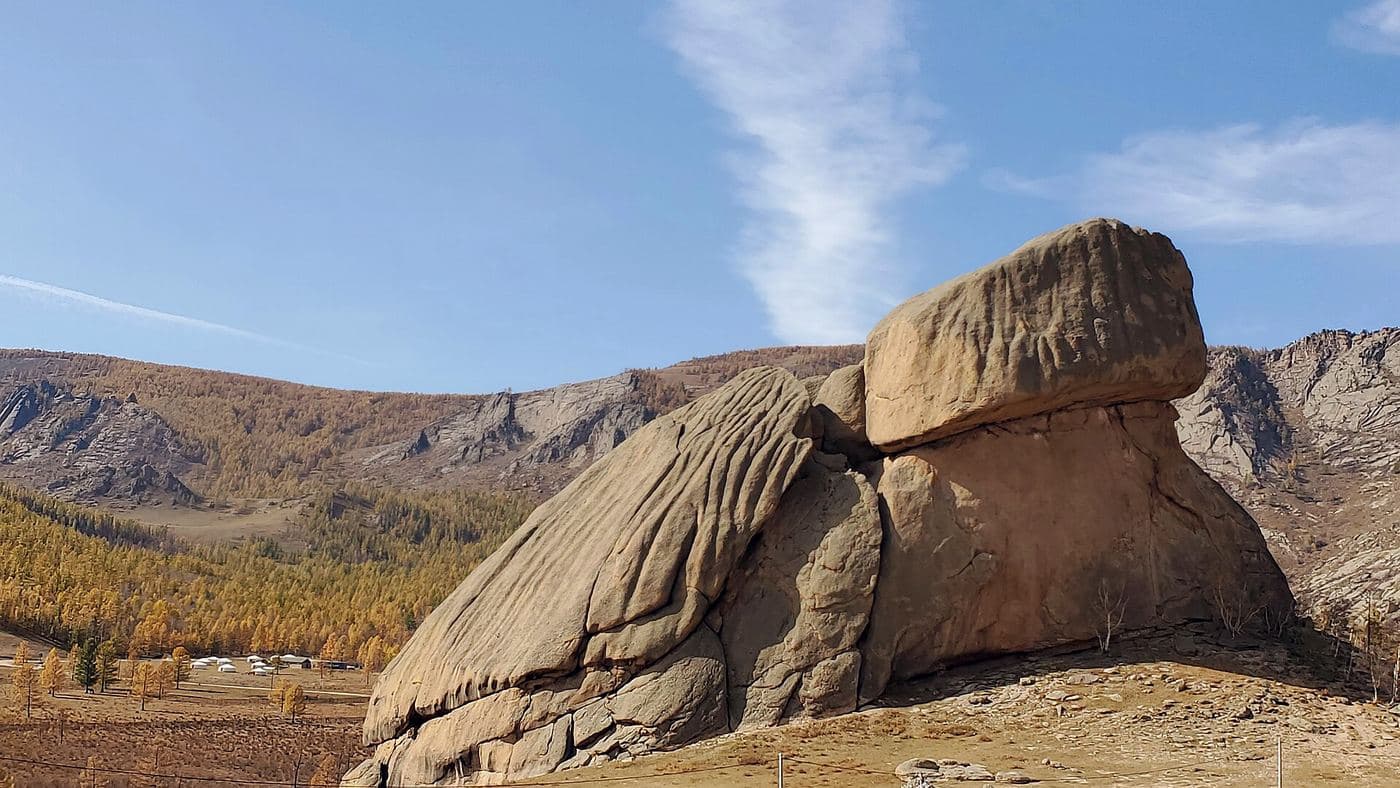
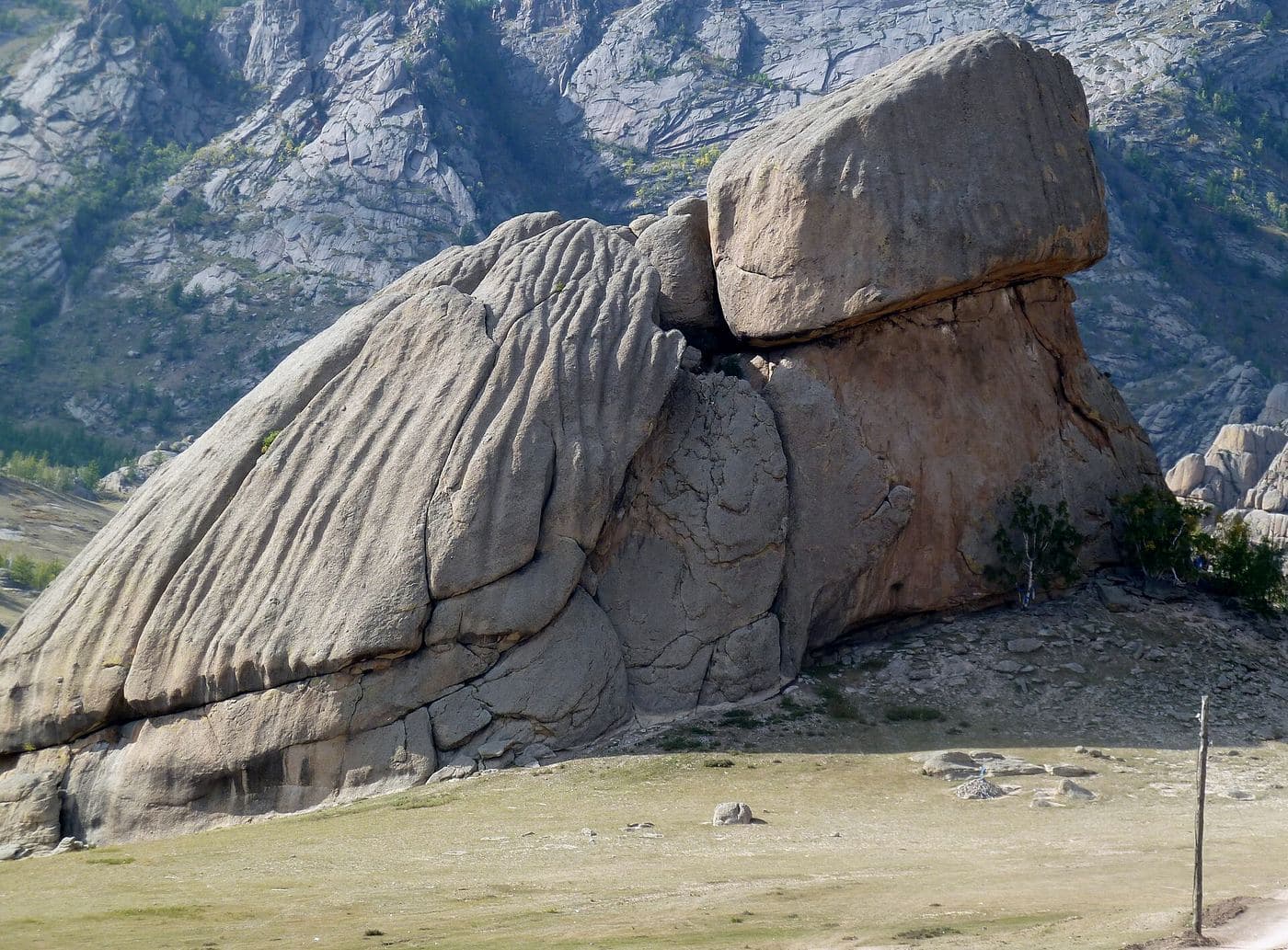
- Turtle Rock (Мэлхий хад), the granite tor the whole area is photographed for
- Aryabal Meditation Temple, completed in 2004, reached by 108 stone steps and ringed by 108 small stupas
- The Gorkhiin Davaa pass, beyond which the camps and crowds stop
- Terelj village at the end of the paved road, with small shops and restaurants
- Horse and camel riding hired directly at the camps
- Khagiin Khar Lake, a 20 m deep glacial lake about 80 km upstream from the camps
- Yestii hot springs, natural springs a further 18 km up the valley
- Cross-country skiing on the valley floor in winter
Season notes
Camps run from roughly late May to late September, with a smaller winter operation. Temperatures can drop to about -28 °C in winter. The road is paved and cleared year-round, so Terelj is one of the few countryside spots that stays reachable in a normal car in any season. Summer weekends bring large numbers of Ulaanbaatar residents; midweek is far quieter.
From Ulaanbaatar
Paved the whole way. From the city centre take the eastern highway A0501 for 37 km, then turn left onto branch A24; 5 km later the road crosses the Tuul and the park begins. Terelj village is about 66 km from the centre.
By air
None.
Where to stay
- Tourist ger camps line the road toward Terelj village; a two-person ger without meals was quoted at 25,000 ₮, and there is room to bargain because the camps are numerous and near-identical (Wikivoyage, read September 2026)
- Smaller family-run camps away from the main strip quote around €20 per person per night including all meals (Wikivoyage, read September 2026)
- A few higher-end lodges with private bathrooms operate year-round; no 2026 rate verified
Be aware
Sources (4)
- Gorkhi-Terelj National Park - Wikipedia — name meaning, road description and distances, administrative split between Nalaikh and Töv, Khagiin Khar Lake and Yestii springs, extent of development
- Gorkhi-Terelj National Park - Wikivoyage — 3,000 ₮ gate fee, bus routes and fares, ger camp prices, Turtle Rock coordinates, Aryabal temple detail, winter low temperature, activity list
- Nominatim (OpenStreetMap geocoder) — confirming Turtle Rock coordinates and that the point falls in Nalaikh district
- OpenTopoData SRTM 30 m — elevation at the visitor point
Often combined with
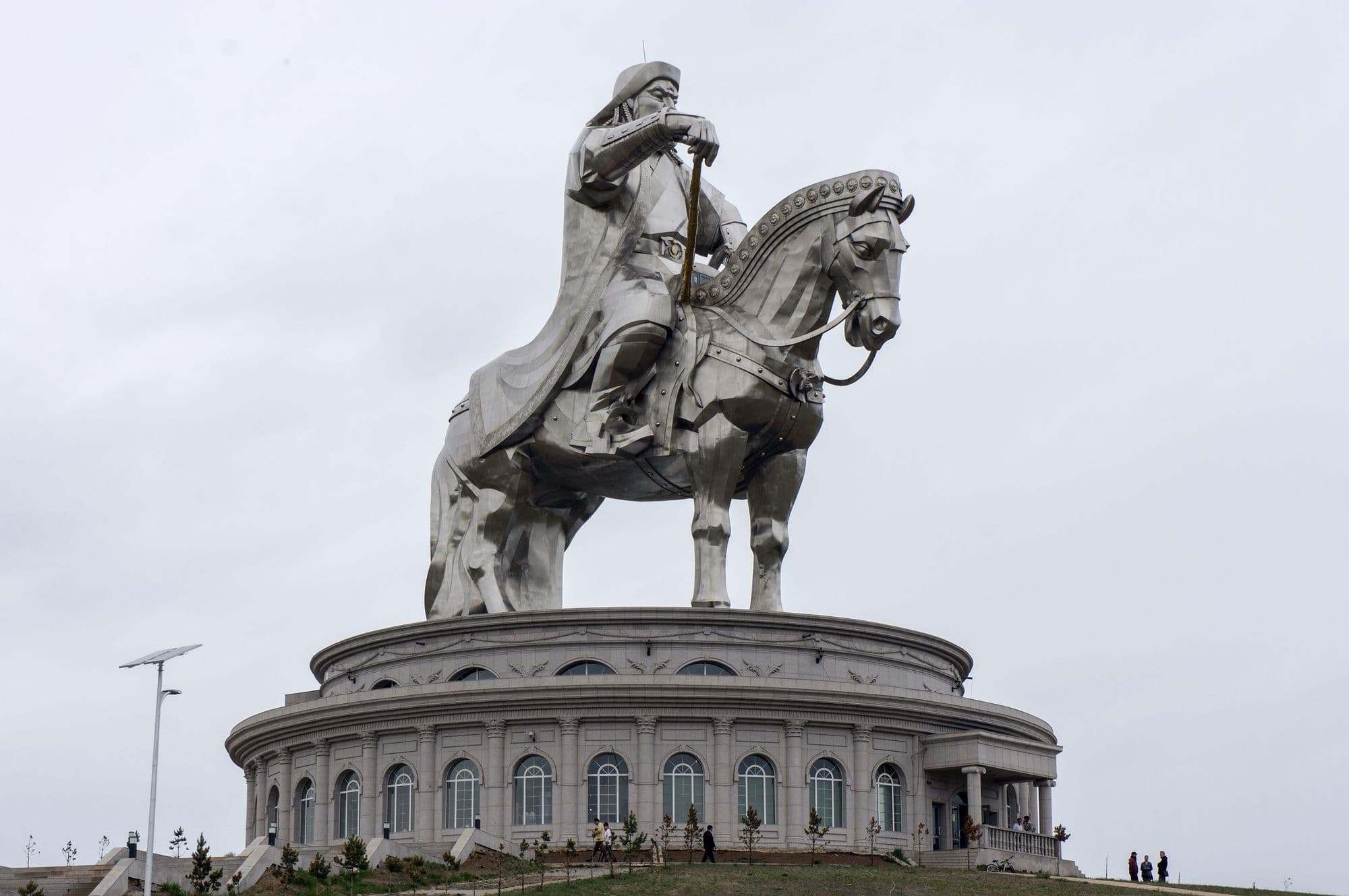
Genghis Khan Equestrian Statue, Tsonjin Boldog
Töv · 54 km
A 40-metre stainless-steel Genghis Khan rides out of the steppe on the south terrace of the Tuul river at Tsonjin Boldog, the place legend says he found a golden whip. It is the tallest equestrian statue in the world, opened on 26 September 2008 for the 800th anniversary of the founding of the Mongol Empire. Visitors climb up through the horse's chest and neck to a viewing platform on its head, looking out over the rider's face and the open country beyond. The 10-metre building it stands on has 36 columns, one for each khan from Genghis to Ligdan.
- Best months
- May–Sep
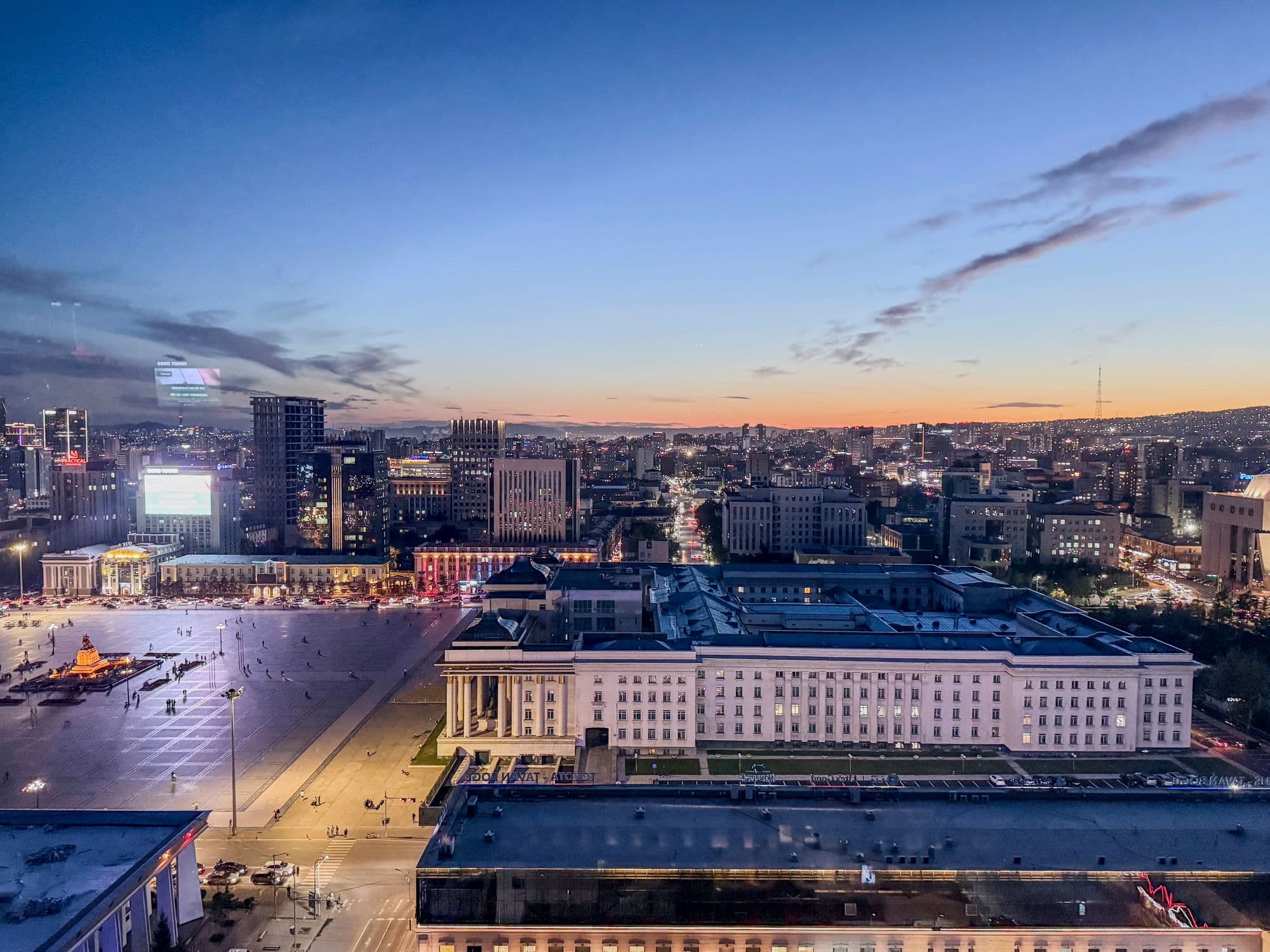
Ulaanbaatar
Ulaanbaatar
Mongolia's capital holds about 1.79 million people, roughly half the country, in a long valley on the Tuul river at around 1,300 m. It began in 1639 as a movable Buddhist monastic camp that shifted location 29 times before settling permanently on this spot in 1778, and took its present name in 1924. By mean annual temperature it is the coldest national capital in the world. For travellers it is less a destination than the hinge of every central-Mongolia trip: the museums that explain what you are about to drive through, the permits, the drivers and the last reliable ATM.
- Best months
- Jun–Sep