Övörkhangai (the waterfall is in Bat-Ölzii sum; the World Heritage property spans Övörkhangai and Arkhangai)· Орхоны хөндий (Улаан цутгалан)
Orkhon Valley Cultural Landscape and Ulaan Tsutgalan waterfall
UNESCO inscribed the Orkhon Valley Cultural Landscape in 2004 under criteria (ii), (iii) and (iv): 121,967 hectares with a 61,044-hectare buffer, recognised for more than two thousand years of nomadic pastoral tradition and for the succession of empires that put their capitals along one river. Upstream from Kharkhorin the valley narrows into grassland, basalt and larch, and the place most travellers actually stop is Ulaan Tsutgalan, a 24-metre waterfall where the Ulaan river drops into the Orkhon. Getting there costs most of a day on rough track, which is exactly why the valley still feels like herder country rather than a monument.
- From Ulaanbaatar
- 450 km
- Drive time
- 8-10, usually split over two days with a night in Kharkhorin
- Altitude
- 1,802 m
- Typical stay
- 1-2 at the falls; 3-5 if you ride
- Best months
- Jul–Aug
- Jan: not a best month
- Feb: not a best month
- Mar: not a best month
- Apr: not a best month
- May: not a best month
- Jun: not a best month
- Jul: a best month
- Aug: a best month
- Sep: not a best month
- Oct: not a best month
- Nov: not a best month
- Dec: not a best month
Highlights
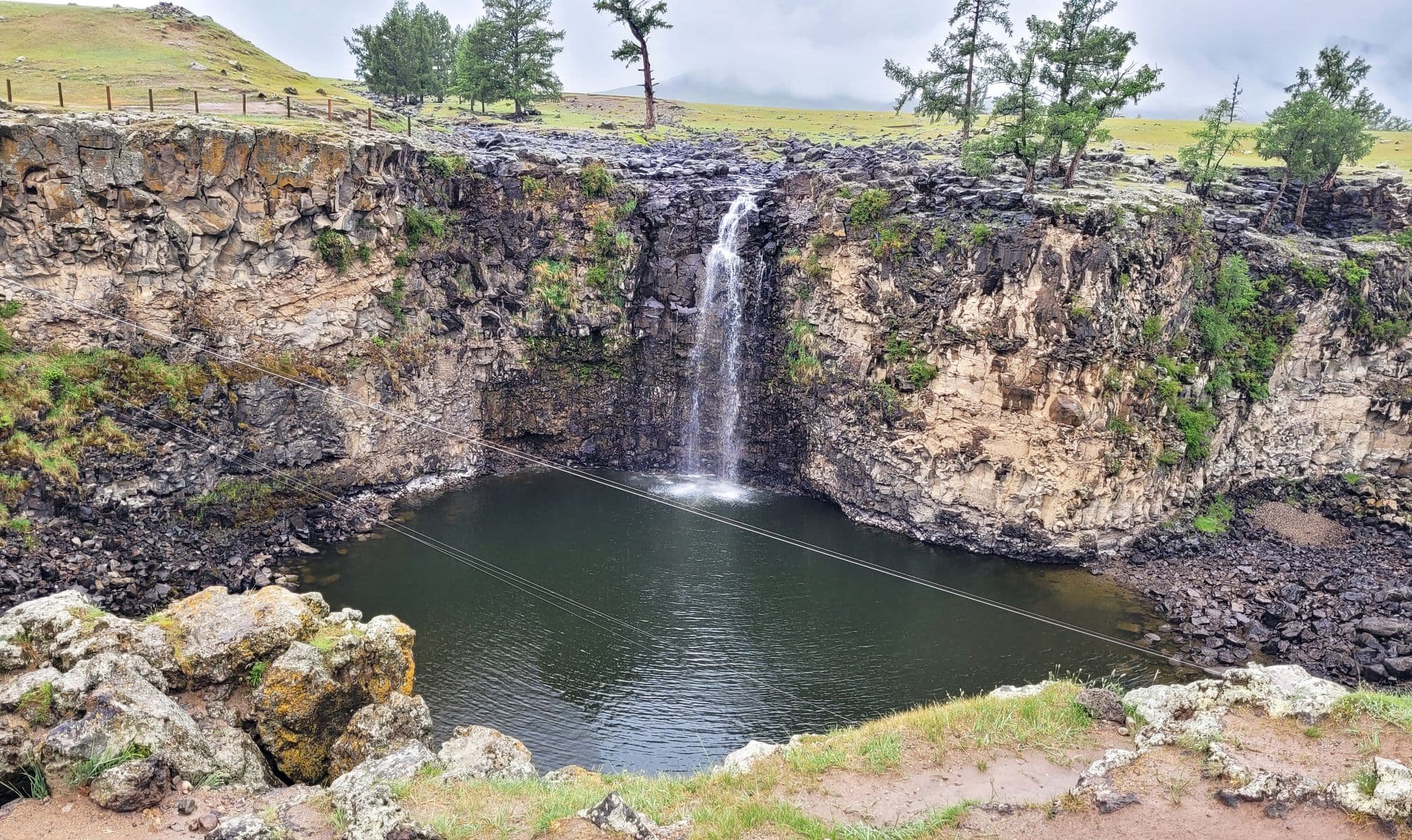
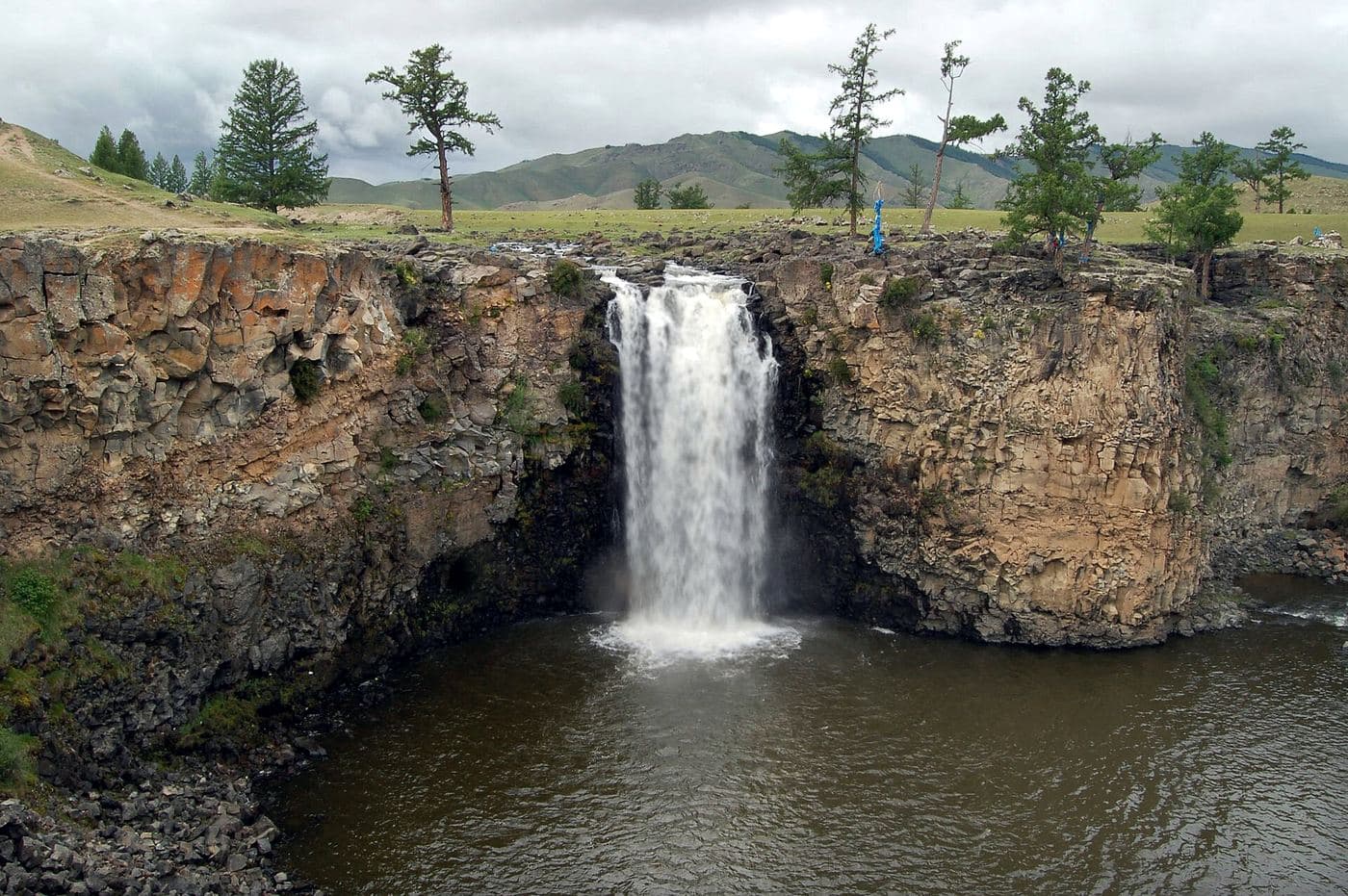
- Ulaan Tsutgalan waterfall - 24 m high and 25-50 m across, widening to about 60 m after heavy rain, which makes it Mongolia's widest
- The basalt gorge below the falls, which you can scramble into
- Tövkhön hermitage at about 2,600 m, Zanabazar's mountain retreat, reached by a steep final climb
- Shankh Western Monastery, one of the few that kept functioning
- Khar Balgas, the ruined 8th-century Uyghur capital downstream
- The Orkhon Turkic memorial steles to Bilge Khan and Kül Tigin
- Doit Hill, with remains of a 13th-14th century Mongol palace
- Multi-day horse riding between herder families along the river - the classic Orkhon trip
- Khujirt hot-spring town, 50 km south of Kharkhorin, on the way in or out
Season notes
The falls depend entirely on rain. In a dry June they can be a disappointing trickle; after July and August storms the Orkhon can rise one to two metres at the falls and the sheet goes right across. The same rain turns the access track to mud. The Kharkhorum ice-climbing festival is held at the frozen falls in winter, but winter access needs a proper expedition vehicle. Nights are cold at 1,800 m in any month.
From Ulaanbaatar
Paved to Kharkhorin, then roughly 90 km of dirt and rock track south-west via Bat-Ölzii. The last section crosses old lava field and boulder ground and needs high clearance; it is slow in the dry and genuinely difficult when wet. The waterfall is about 20 km west of the Bat-Ölzii sum centre.
By air
None. The nearest airstrip is Kharkhorin (KHR), with intermittent service, and you still face the track from there.
Where to stay
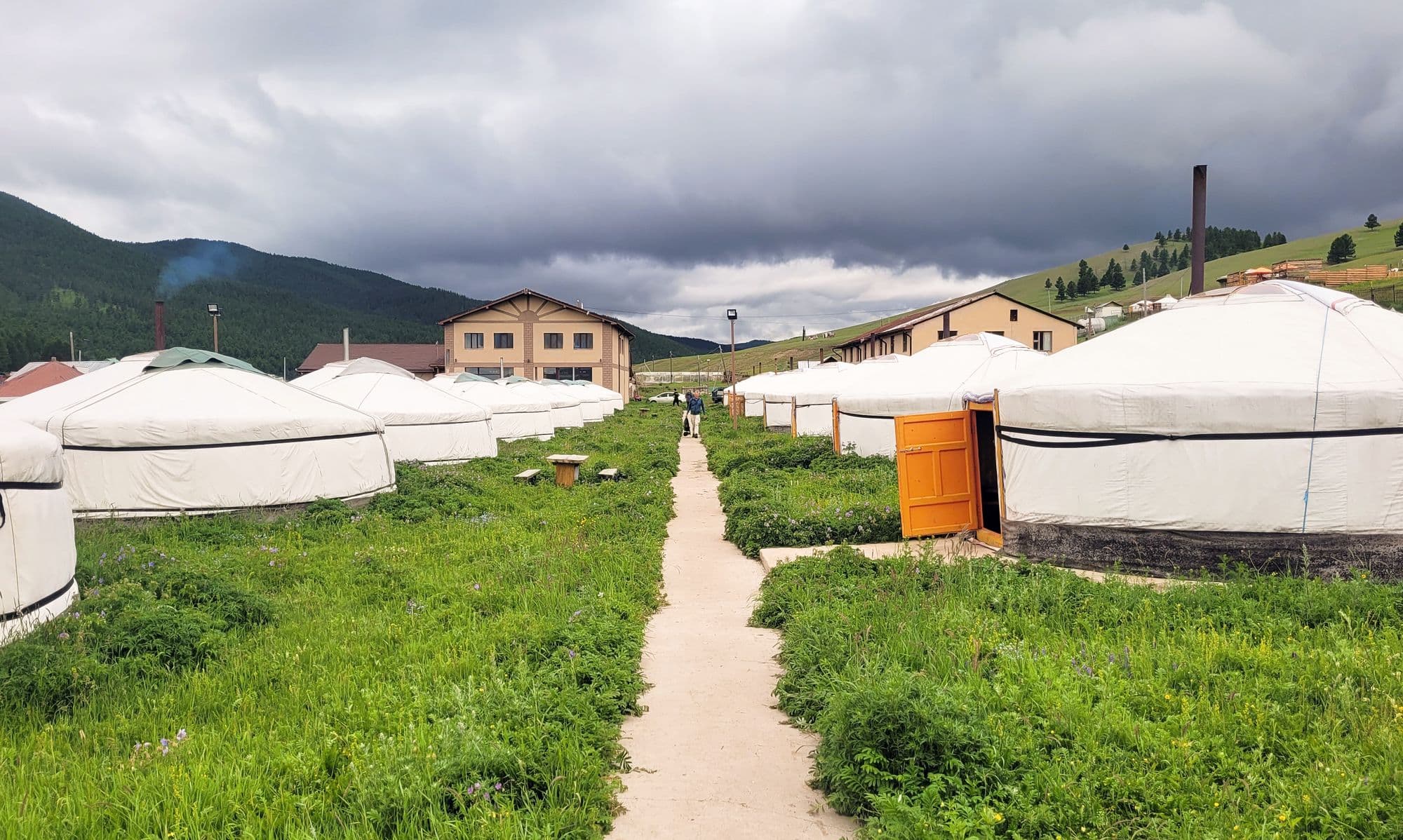
- Ger camps sit 300-600 m from the waterfall; no 2026 rate verified from a primary source (unverified)
- Herder families along the valley take paying guests through local operators, which is how most horse trips are run
- Khujirt, 50 km south of Kharkhorin, has a hotel and sanatorium if you want a bed with plumbing
Be aware
Sources (4)
- Orkhon Valley Cultural Landscape - Wikipedia — 2004 inscription, criteria (ii)(iii)(iv), 121,967 ha property and 61,044 ha buffer, component sites including Khar Balgas, Tövkhön, Shankh, Doit Hill and the Turkic memorials
- Улаан цутгалан - Монгол Википедиа — waterfall height 24 m, width 25-50 m widening to 60 m, Bat-Ölzii sum location 20 km west of the sum centre, ger camps 300-600 m away, winter ice climbing festival, river rise after storms
- Karakorum - Wikivoyage — Tövkhön US$3 park entrance, route description to Tövkhön and the falls, road condition on the upper approach
- Nominatim (OpenStreetMap geocoder) — waterfall coordinates and confirmation it lies in Bat-Ölzii sum, Övörkhangai
Often combined with
Kharkhorin and Erdene Zuu Monastery
Övörkhangai · 360 km
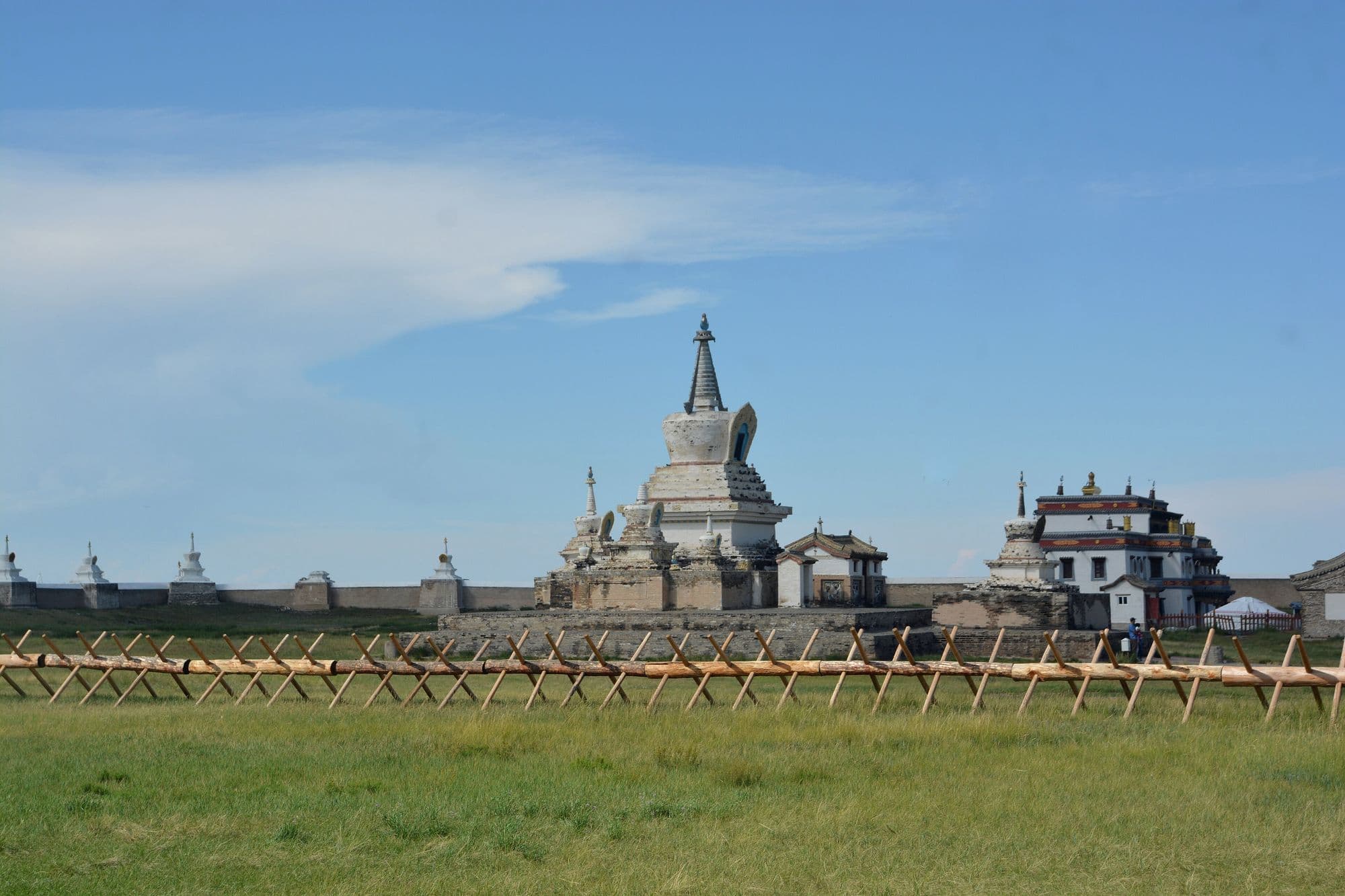
Kharkhorin sits at the lower end of the upper Orkhon valley, where the easternmost Khangai foothills meet open steppe. Just north of the modern town lie the ruins of Karakorum, briefly the imperial capital of the Mongol Empire under Ögedei Khan and the city William of Rubruck described in 1254. Built partly out of its stones in 1585, Erdene Zuu is probably the oldest surviving Buddhist monastery in Mongolia, a walled compound edged with stupas holding a handful of Chinese- and Tibetan-style temples and one working temple that still serves the town. Both sit inside the Orkhon Valley Cultural Landscape World Heritage Site.
- Best months
- Jun–Sep
Tsenkher Hot Springs
Arkhangai · 470 km
In a larch-edged side valley in Tsenkher sum, a handful of resort ger camps have been built around hot mineral water piped into open-air stone pools. There is nothing ancient or hidden about it - this is Mongolia's spa stop, and its job is obvious after three or four days of dirt roads and cold-water washes. You soak outdoors at about 1,770 metres with the valley walls above you, and on a clear night the steam and the stars do most of the work. Most people arrive from Kharkhorin and leave toward the Khangai lakes the next morning.
- Best months
- Jun–Sep