Dundgovi (Дундговь)· Онгийн хийд
Ongi Monastery (Ongiin Khiid)
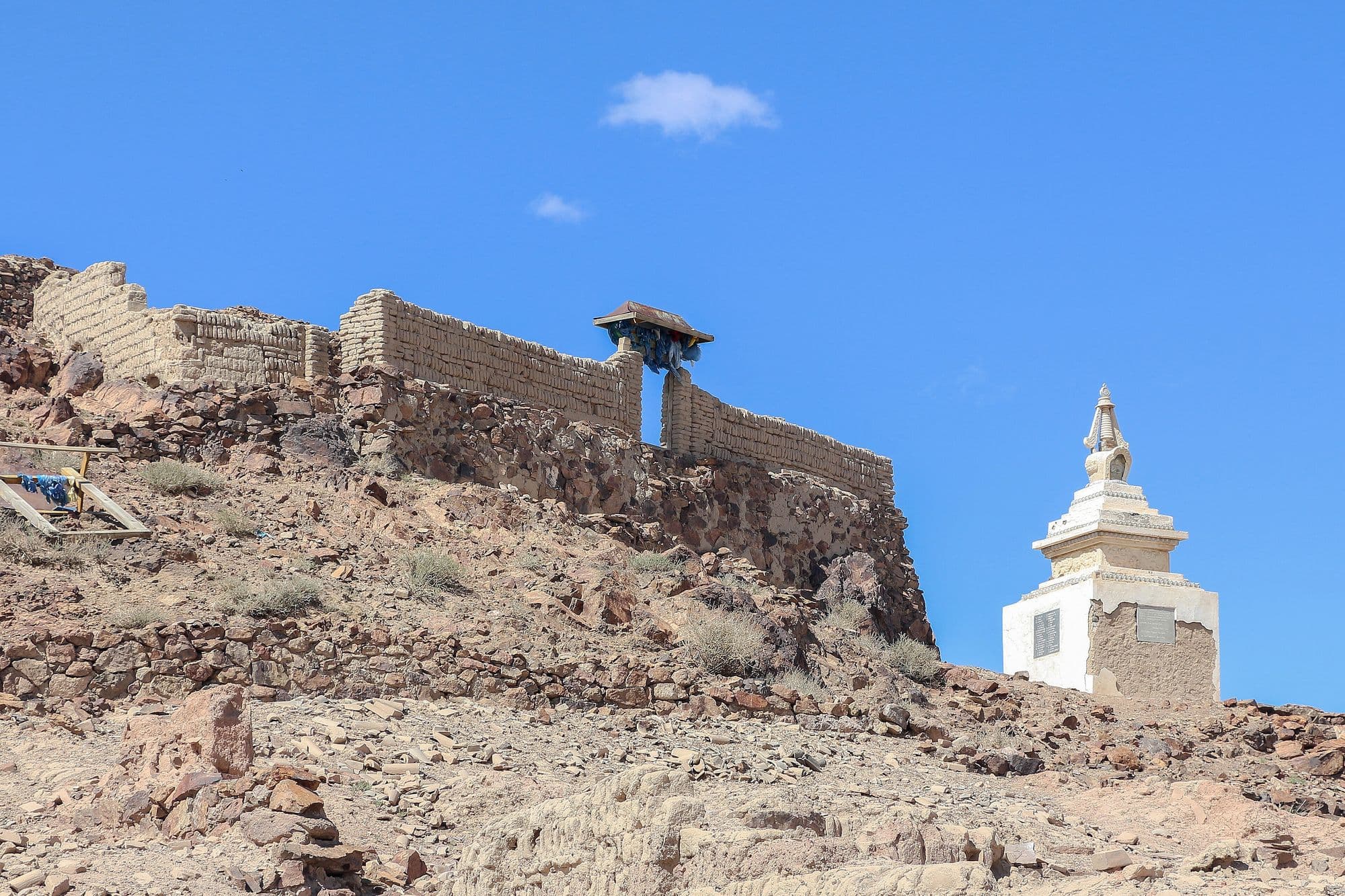
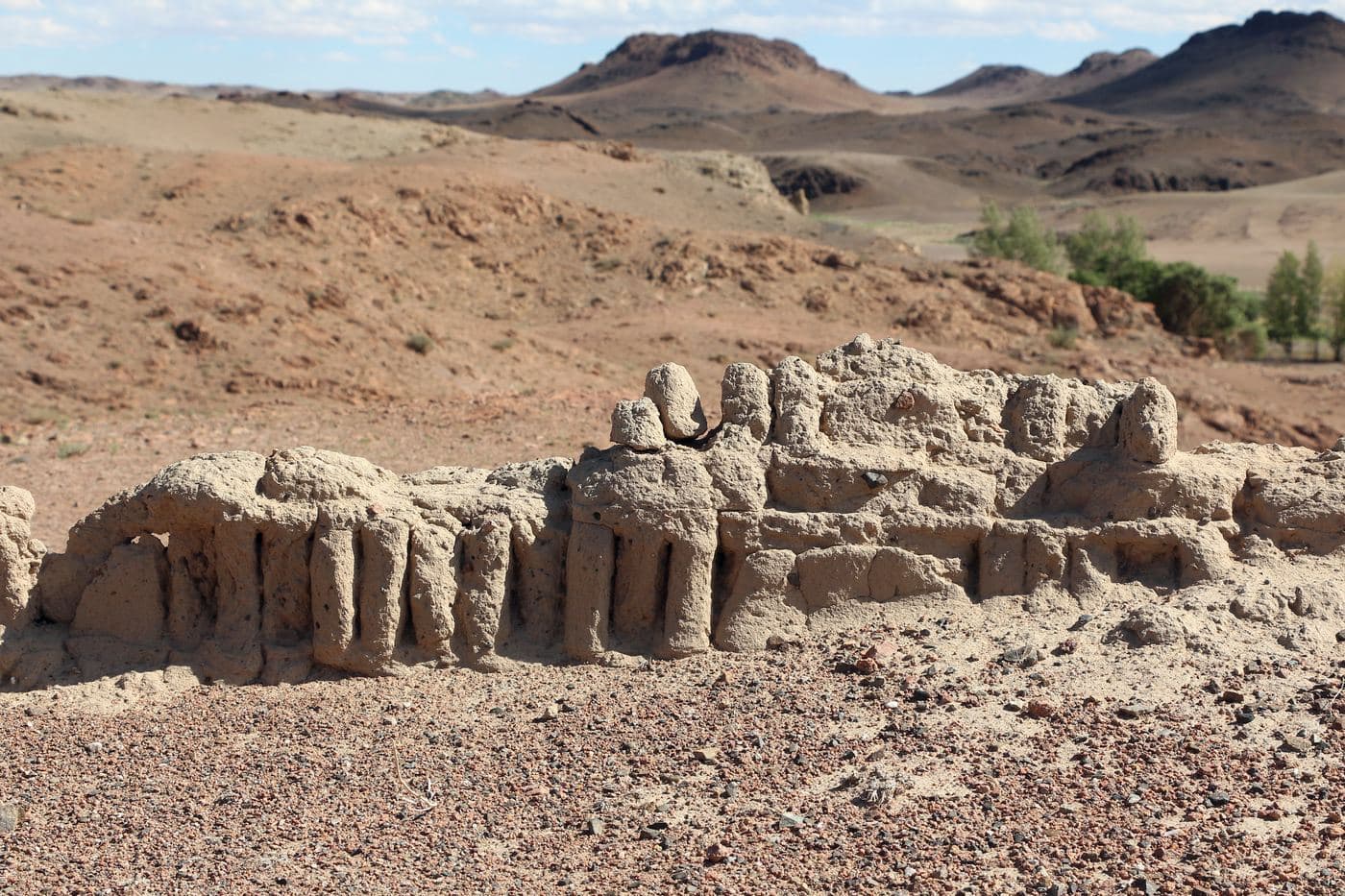
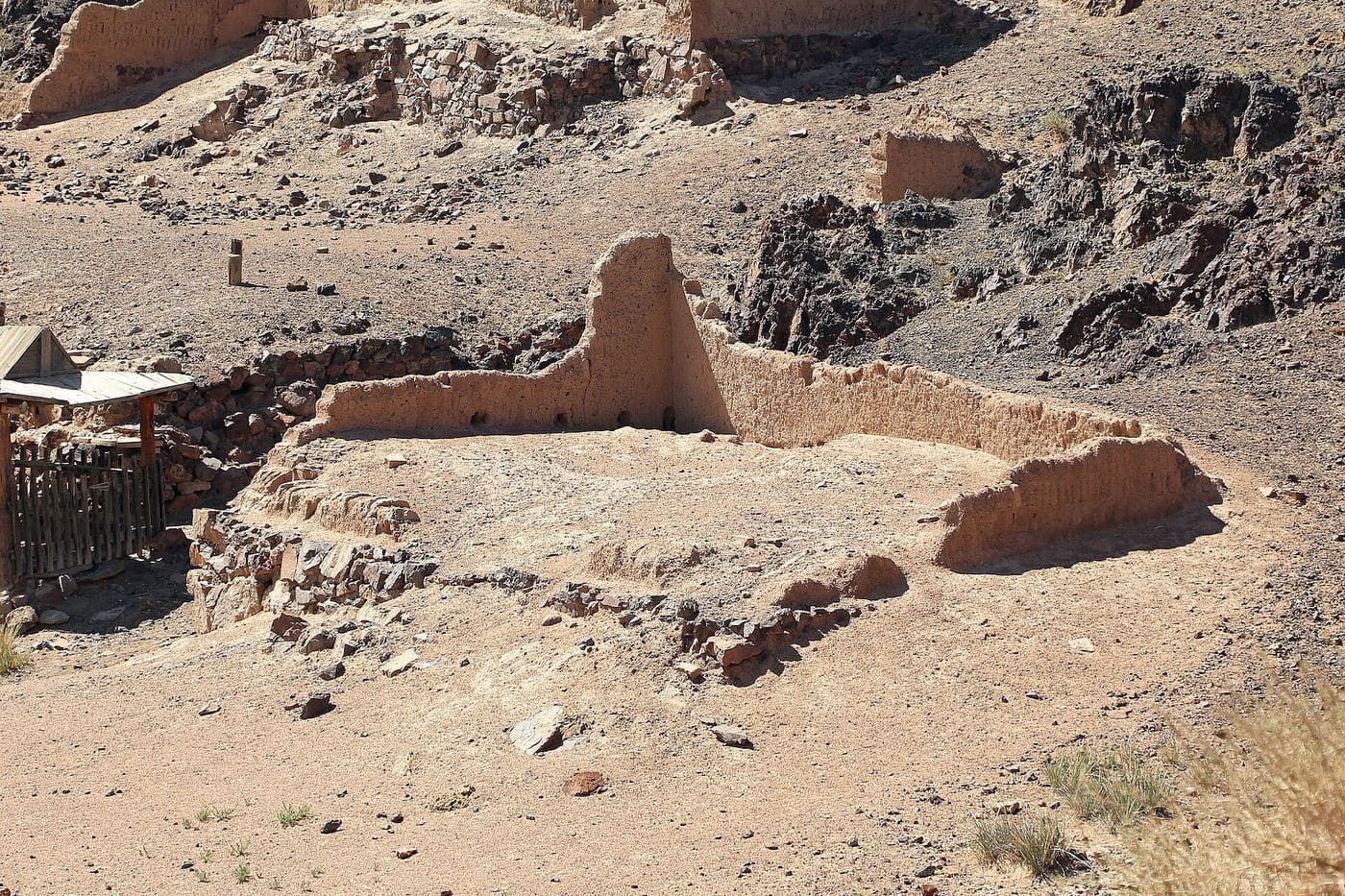
Ongi is the ruin of what was once one of the largest monastic complexes in Khalkha Mongolia, spread across both banks of the Ongi river at the foot of Saikhan-Ovoo mountain. It grew from the late 18th century into a centre of over a thousand monks with separate colleges for philosophy, tantra, medicine and mathematics, and it was destroyed in the Stalinist purges of the 1930s. What remains is a field of broken walls, foundations and standing stupas, with one small temple rebuilt since the 1990s and a handful of monks again in residence. It sits almost exactly where a Gobi loop needs a night, and the contrast between the scale of the ruins and the emptiness around them is the point.
- From Ulaanbaatar
- 528 km
- Drive time
- 8-10 hours, usually reached on day two of a Gobi loop rather than direct
- Altitude
- 1,302 m
- Typical stay
- 1 night at one of the camps immediately beside the ruins
- Best months
- May–Sep
- Jan: not a best month
- Feb: not a best month
- Mar: not a best month
- Apr: not a best month
- May: a best month
- Jun: a best month
- Jul: a best month
- Aug: a best month
- Sep: a best month
- Oct: not a best month
- Nov: not a best month
- Dec: not a best month
Highlights
- Walking the foundations and broken walls of the two monastery wings on either side of the river
- Surviving stupas that were not pulled down in the purge
- The rebuilt temple, small and active, with a few monks in residence
- A modest on-site museum and prayer hall run by the monastery
- The Ongi river and its green corridor, an unexpected line of water in dry country
- Climbing the ridge behind the ruins for an overview of the whole site
- Sunset light on the ruins and the river valley
- Memorial markers for the monks killed in the 1930s
Season notes
May to September. The Ongi river is seasonal and has run dry in recent years, so the green corridor is not guaranteed - it is at its best in June and July after rain. Summer is hot and shadeless among the ruins; visit early or late. September is comfortable and quiet. Camps close from around October.
From Ulaanbaatar
Two common routes. Via Mandalgovi the paved highway runs about 260 km, then roughly 180 km of dirt track west and south. Via Arvaikheer the paved section is longer but the dirt approach from the north is also unpaved. Either way the last 100+ km is graded dirt and requires high clearance.
By air
None. The nearest airports with scheduled service are Arvaikheer and Dalanzadgad, both still several hours away by road, so Ongi is reached by road on an overland loop.
Where to stay
- Ger camps sit within 1 km of the ruins on the river terrace, including Secret of Ongi and Ongi Monastery Camp (mapped in OpenStreetMap)
- Standard tourist ger camp: roughly USD 40-70 per person per night including three meals (2026)
- En-suite or deluxe ger camp: roughly USD 80-150 per person per night including meals (2026)
Be aware
Sources (4)
- Онгийн хийд - Mongolian Wikipedia — Alternative name, the 1760-1810 construction and its founders, over 1,000 monks, the four datsans and their subjects, the 18 km distance from Saikhan-Ovoo, and the 'three Ongi monasteries' grouping
- Ongi Monastery - Wikipedia — Coordinates of the ruins
- Discover Mongolia - Ongi temple — About 1,000 lamas and 28 temples and other buildings, destruction in the 1930s purges, rebuilding of one temple from 1994 and the ten monks studying today
- OpenStreetMap - Ongiin Khiid ruins, Ongi river and camps — Ruin and camp positions, the Ongi river course and the Saikhan-Ovoo sum location
Often combined with
Baga Gazriin Chuluu
Dundgovi · 278 km
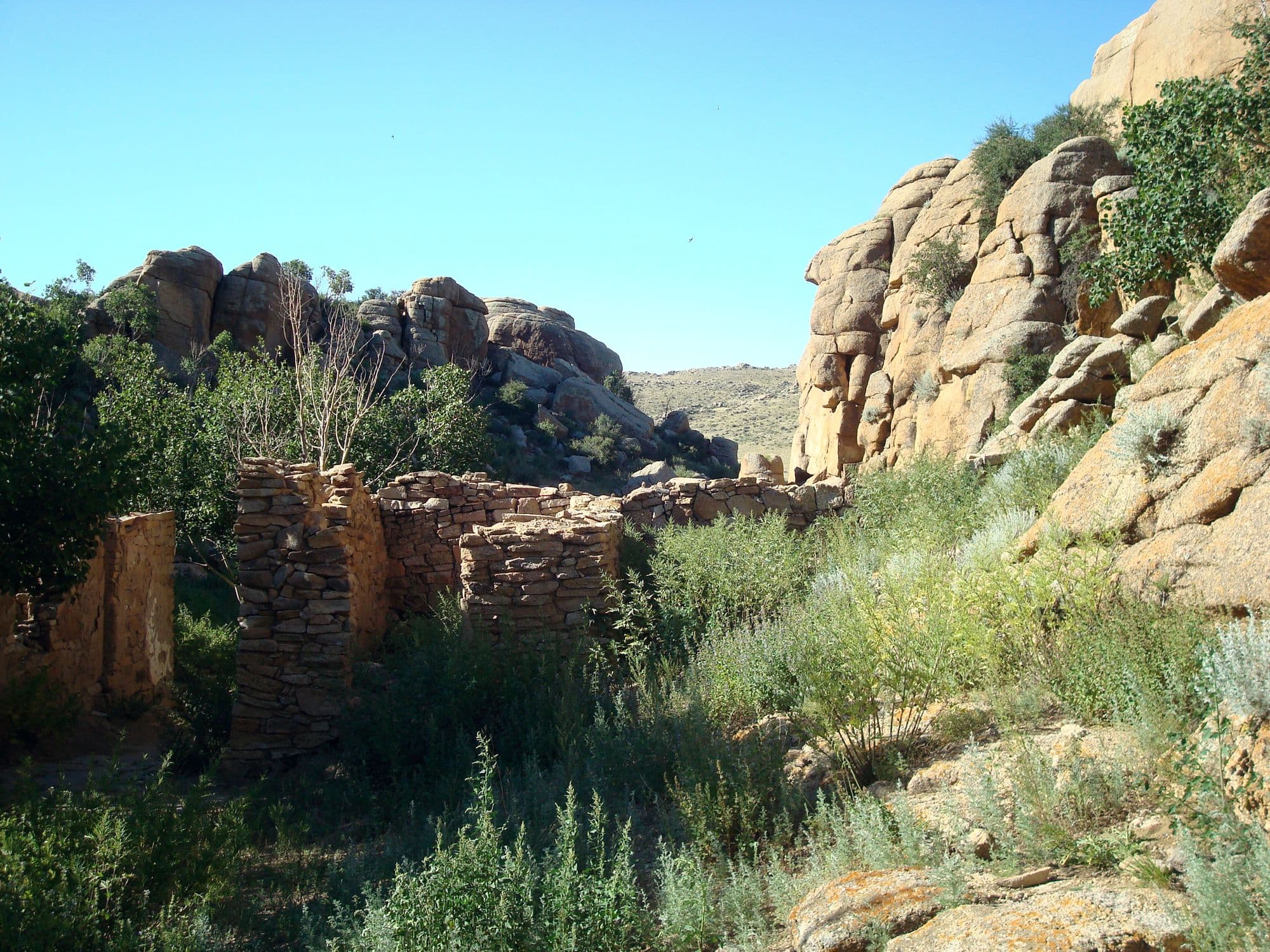
Baga Gazriin Chuluu is a granite massif standing out of the steppe in northern Dundgovi, a jumble of weathered boulders, tors and narrow rock corridors that looks nothing like the sand-and-gravel Gobi people expect. Because it is only four or five hours from Ulaanbaatar on mostly paved road, it is the usual first night on a Gobi loop and the first proper taste of the desert edge. The rocks hold the ruins of a stone temple, a cave, rock carvings and a spring that Mongolians visit for their eyes. It rewards a slow walk more than a photo stop.
- Best months
- May–Sep
Tsagaan Suvarga (White Stupa)
Dundgovi · 445 km
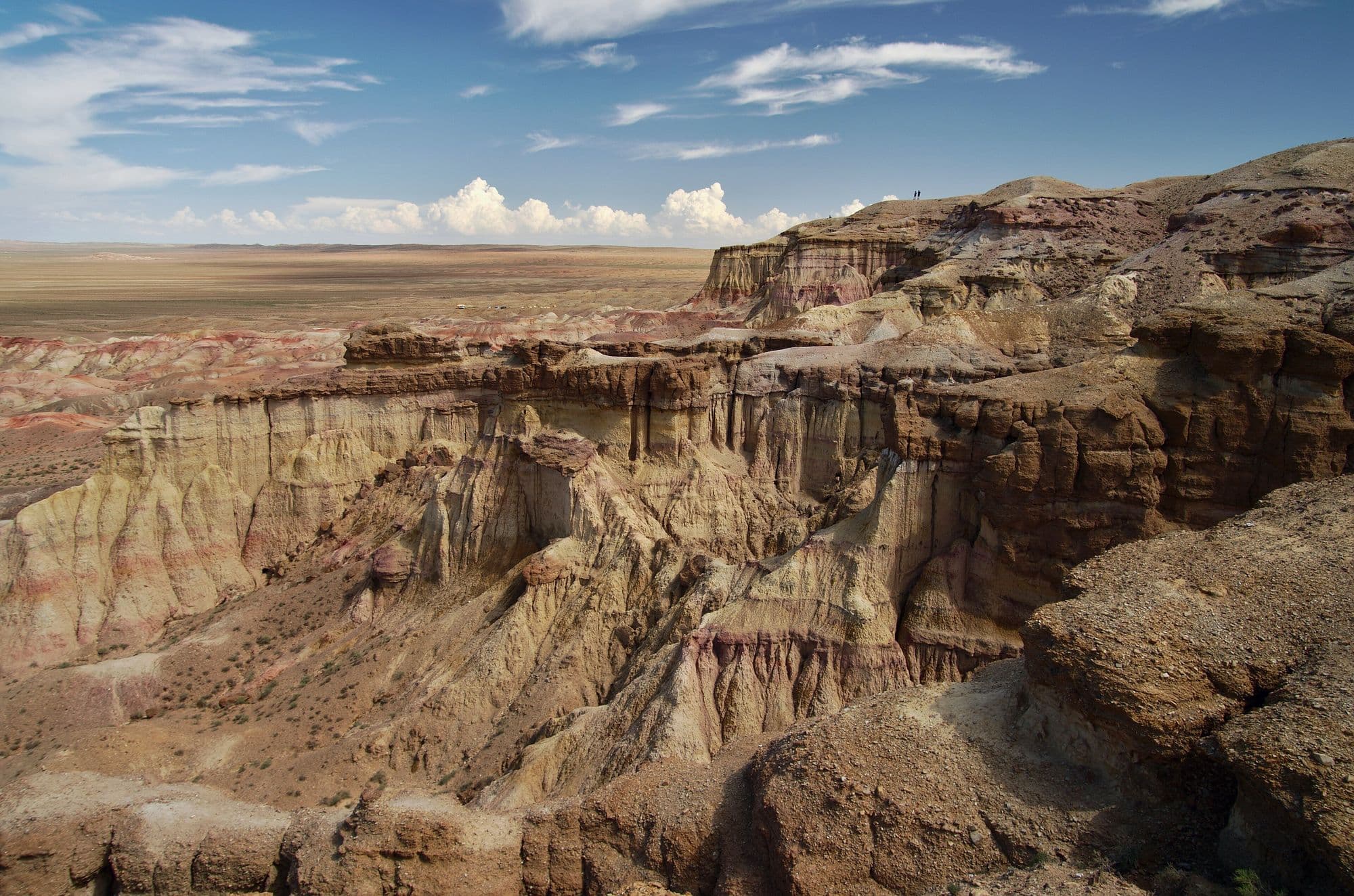
Tsagaan Suvarga is the eroded edge of an old lake-bed plateau in the south of Dundgovi, where the ground simply stops and drops away into a wall of banded sediment. Seen from the plain below, the columns and buttresses look like a row of pale stupas, which is where the Mongolian name comes from. The colours run from chalk white through pink and ochre to rust, and they shift completely between morning and late afternoon light, so most visitors time their stop for one end of the day. It is usually a half-day stop rather than a destination in itself, on the overland route between the Dundgovi sites and the deep Gobi.
- Best months
- May–Sep
Bayanzag (the Flaming Cliffs)
Ömnögovi · 667 km
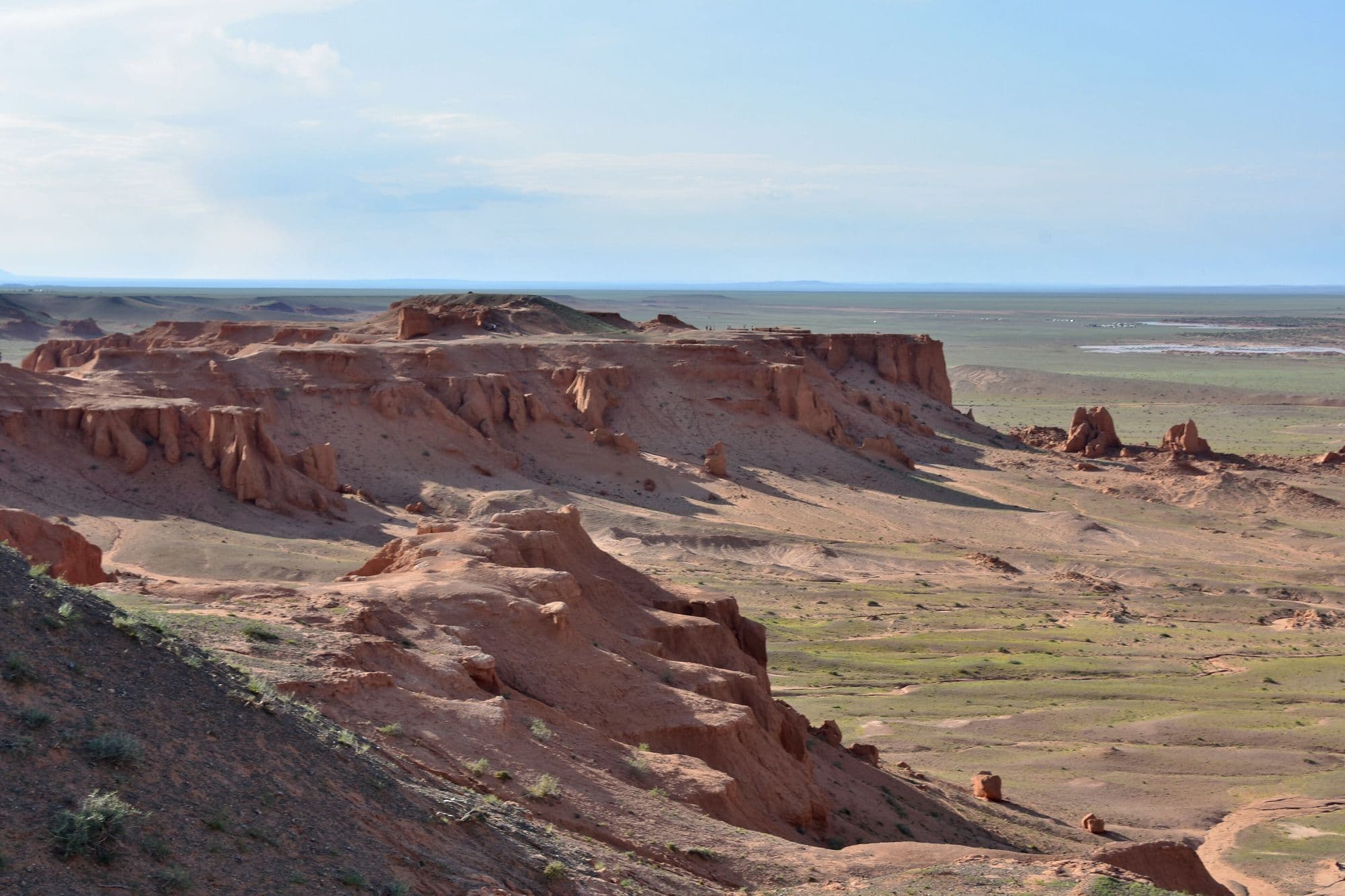
Bayanzag is a line of orange sandstone cliffs and badlands on the edge of a saxaul woodland, and it is the single most important site in the history of dinosaur palaeontology in Asia. Roy Chapman Andrews of the American Museum of Natural History named it the Flaming Cliffs in the 1920s for the colour the rock turns at sunset, and it was here that the first scientifically recognised dinosaur eggs were found. The rock belongs to the Djadochta Formation, which has also produced Velociraptor, Protoceratops, Oviraptor and some of the earliest known placental mammals. Visiting means walking the rim and the gullies below, which is a short and easy stop, and it is almost always timed for late afternoon.
- Best months
- May–Sep
Khongoryn Els (the Singing Dunes)
Ömnögovi · 838 km
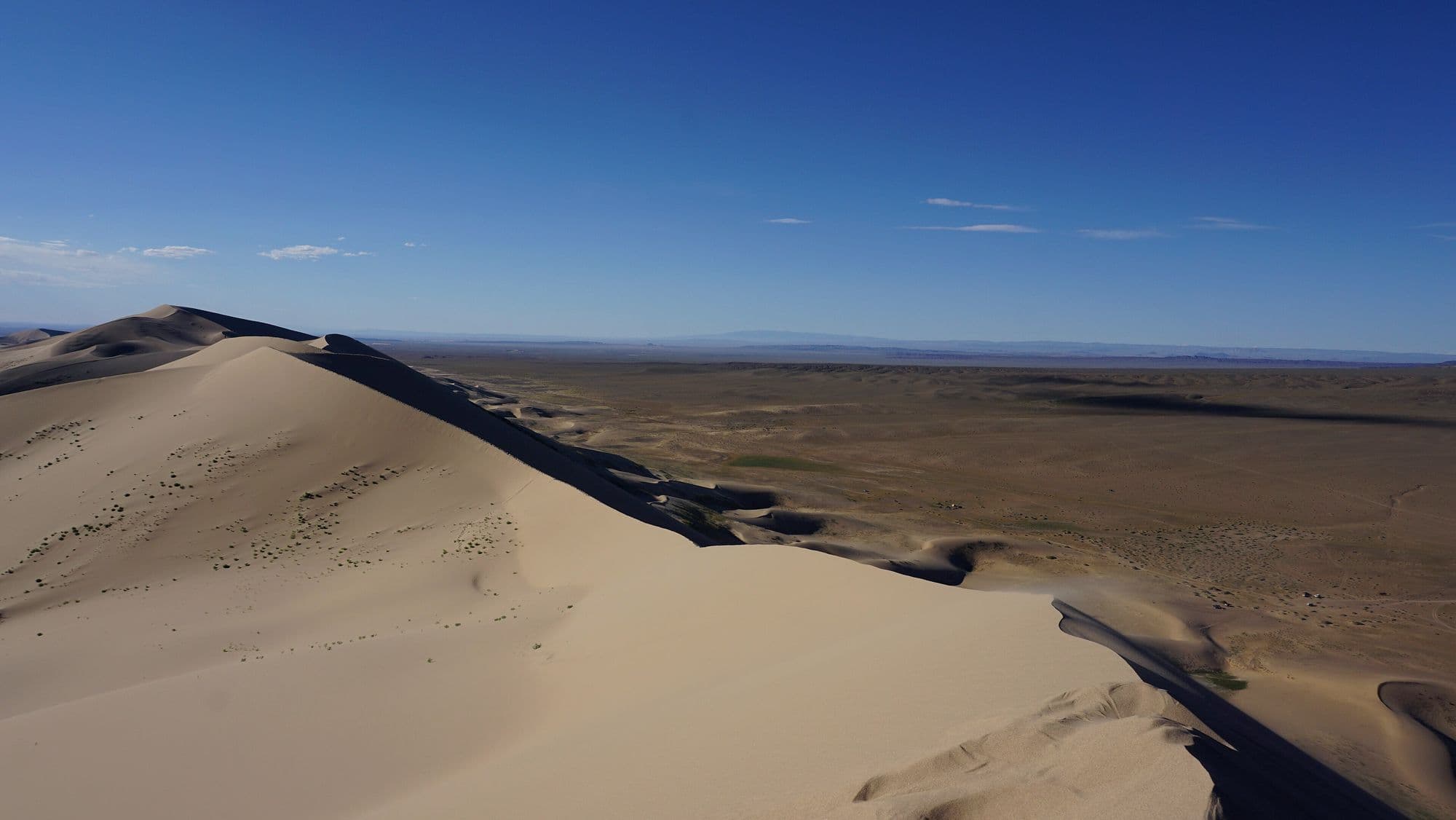
Khongoryn Els is the largest dune field in Mongolia, a band of sand running along the back of the Sevrei and Zöölön ranges with crests that rise as much as 300 m above the plain. Its nickname comes from the low droning hum the sand makes as grains slide and rub against each other on a windy day. The contrast is what makes it: bare rock mountains to the south, a wall of sand in the middle, and on the north side a green ribbon of oasis where the Khongoryn Gol stream surfaces and nomad families graze camels. Climbing the high dune for sunset is the standard reason people come, and it is much harder work than it looks.
- Best months
- Jun–Sep