Övörkhangai· Хархорин, Эрдэнэ зуу хийд
Kharkhorin and Erdene Zuu Monastery
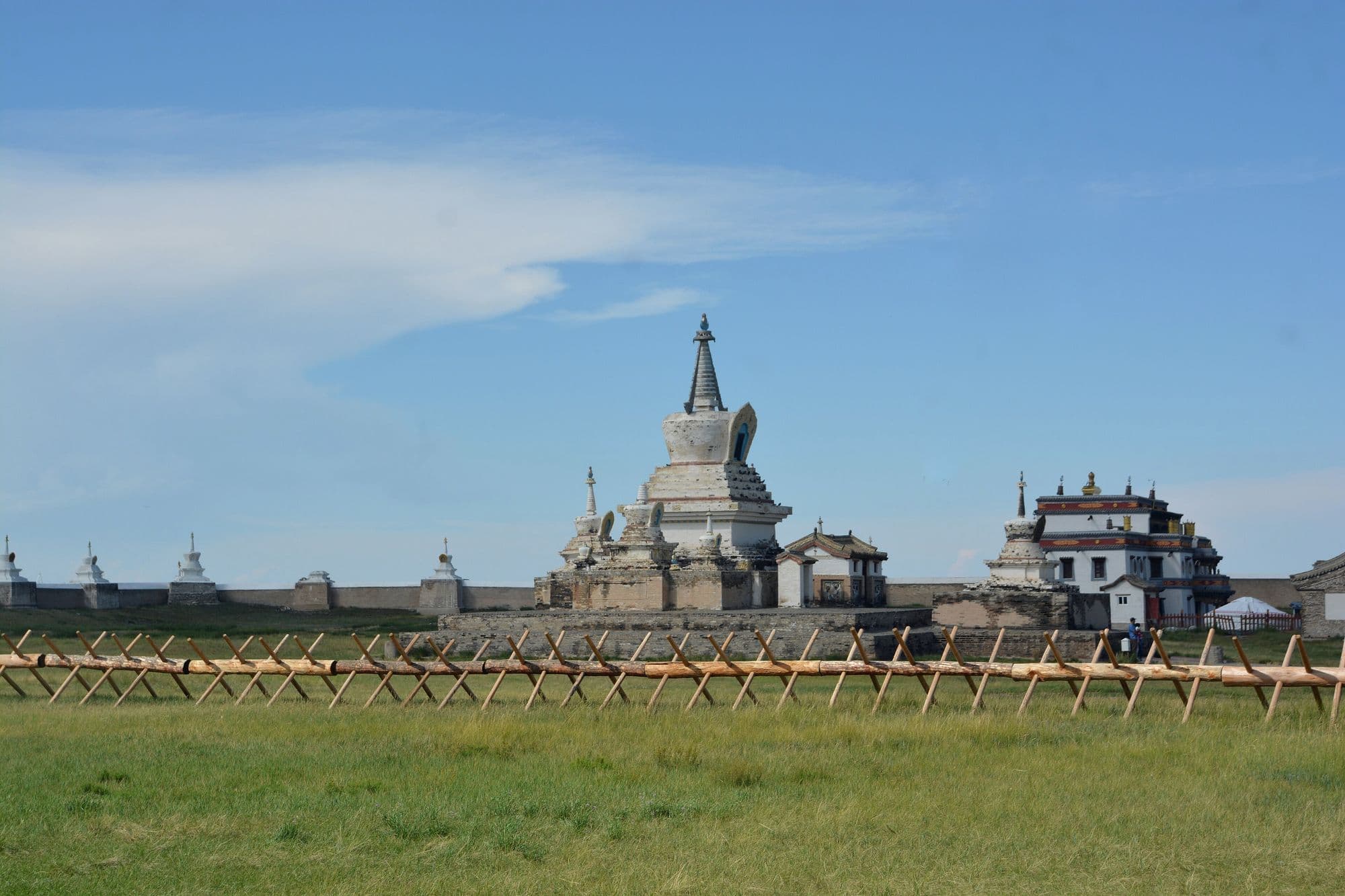
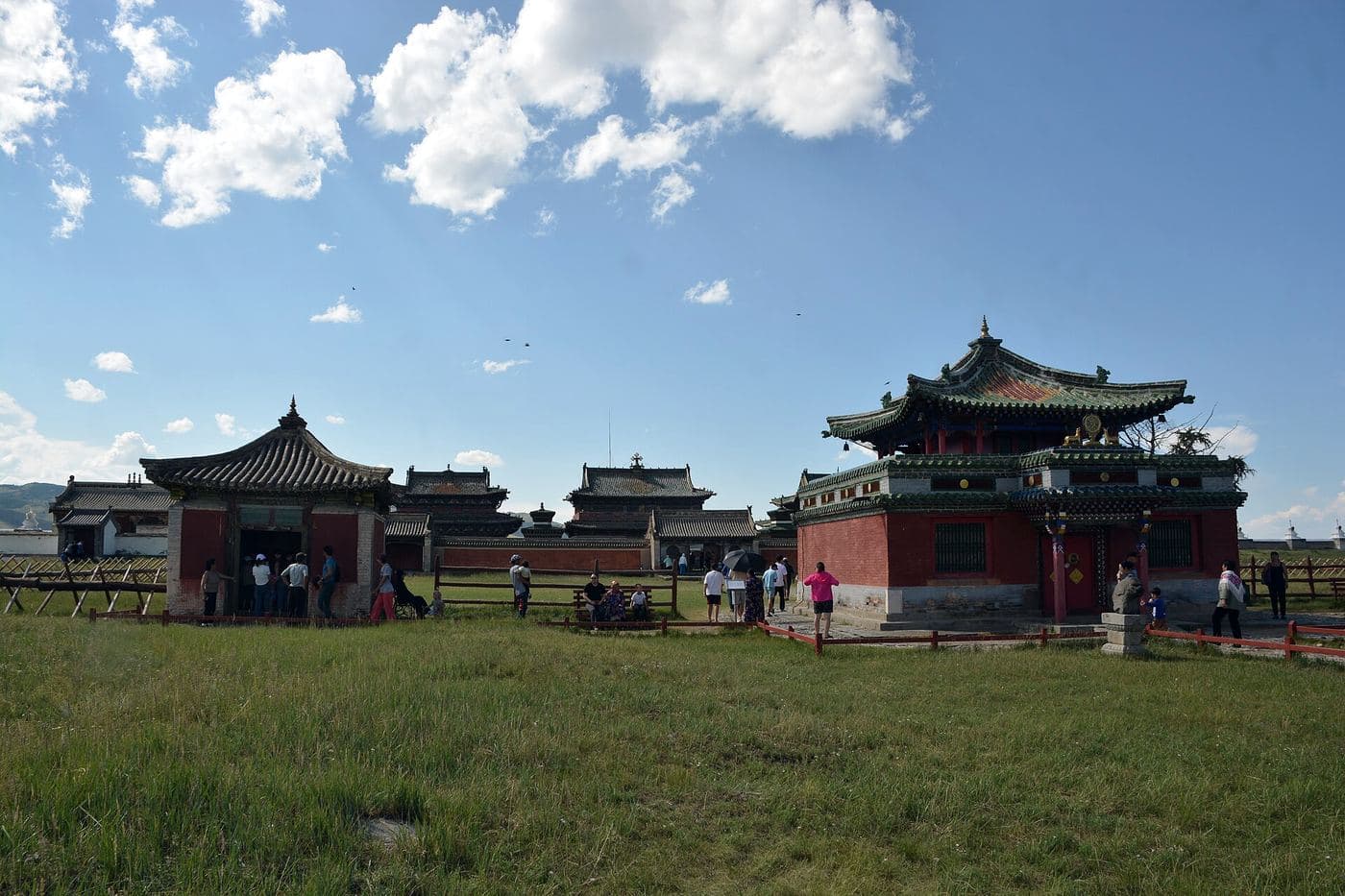
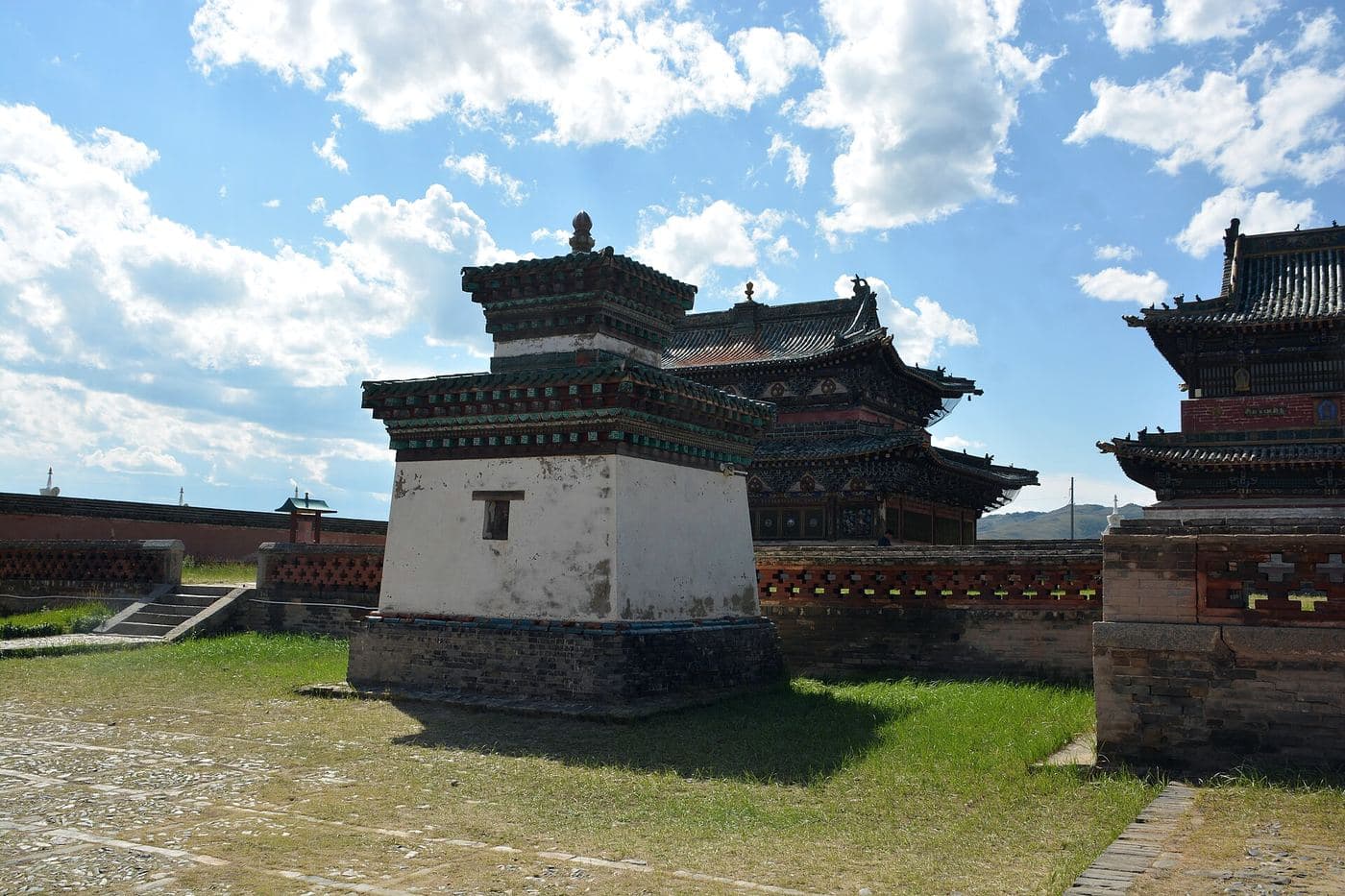
Kharkhorin sits at the lower end of the upper Orkhon valley, where the easternmost Khangai foothills meet open steppe. Just north of the modern town lie the ruins of Karakorum, briefly the imperial capital of the Mongol Empire under Ögedei Khan and the city William of Rubruck described in 1254. Built partly out of its stones in 1585, Erdene Zuu is probably the oldest surviving Buddhist monastery in Mongolia, a walled compound edged with stupas holding a handful of Chinese- and Tibetan-style temples and one working temple that still serves the town. Both sit inside the Orkhon Valley Cultural Landscape World Heritage Site.
- From Ulaanbaatar
- 360 km
- Drive time
- 5-6 by car; the scheduled bus takes about 7 with a lunch stop
- Altitude
- 1,462 m
- Typical stay
- 1-2
- Best months
- Jun–Sep
- Jan: not a best month
- Feb: not a best month
- Mar: not a best month
- Apr: not a best month
- May: not a best month
- Jun: a best month
- Jul: a best month
- Aug: a best month
- Sep: a best month
- Oct: not a best month
- Nov: not a best month
- Dec: not a best month
Highlights
- The walled Erdene Zuu compound and its surviving 16th-18th century temples
- The active Tibetan-style temple in the north-west corner, still used by local worshippers
- The Karakorum site immediately north of the monastery, with a stone turtle marking the old city limit and the excavated remains of Ögedei Khan's palace between turtle and stupa
- The Kharkhorum Museum beside the monastery, which makes sense of the foundations outside
- The famous phallic rock in the hills south of town
- Khar Balgas (Ordu-Baliq), the 8th-century Uyghur Khaganate capital sprawling over some 50 km², about 30 km north-west
- The Orkhon inscriptions across the river from Khar Balgas - 8th-century Turkic memorials to Bilge Khan and Kül Tigin, the earliest recorded Turkic writing
- Moiltyn Am, a Palaeolithic site by the Orkhon bridge just west of town
Season notes
The monastery grounds are open year-round; temple interiors and the museum keep shorter hours in winter. The valley is dusty in a dry June and greens up in July after the rains. High summer brings coach parties, so the compound is calmest early in the morning. The site is exposed with almost no shade.
From Ulaanbaatar
Paved almost the whole way. Take the western highway; at Lün the road splits and most traffic uses the southern branch, which is sealed except for a stretch of roughly 50 km east of Lün.
By air
Kharkhorin Airport (KHR) is 4 km north of the town, but scheduled service is intermittent - confirm it exists before building an itinerary around it.
Where to stay
- Ger camps ring the town, most within a few kilometres of the monastery; no 2026 rate verified from a primary source (unverified)
- Simple guesthouses and a couple of small hotels operate in the town itself
- Khujirt, a hot-spring resort town 50 km to the south on the Orkhon, has a sanatorium and hotel and is an alternative base
Be aware
Sources (3)
- Kharkhorin - Wikipedia — position in the upper Orkhon valley, population and town area, World Heritage inclusion, Karakorum ruins, phallic rock, Moiltyn Am, Khujirt resort
- Erdene Zuu Monastery - Wikipedia — built 1585, oldest surviving Buddhist monastery in Mongolia, Gelug affiliation, inclusion in the World Heritage site
- Karakorum - Wikivoyage — temple tour and photography fees, free grounds, bus fare and journey time, Kharkhorin Airport, road condition east of Lün, Khar Balgas and Orkhon inscriptions, stone turtles and Ögedei's palace, William of Rubruck
Often combined with
Orkhon Valley Cultural Landscape and Ulaan Tsutgalan waterfall
Övörkhangai · 450 km
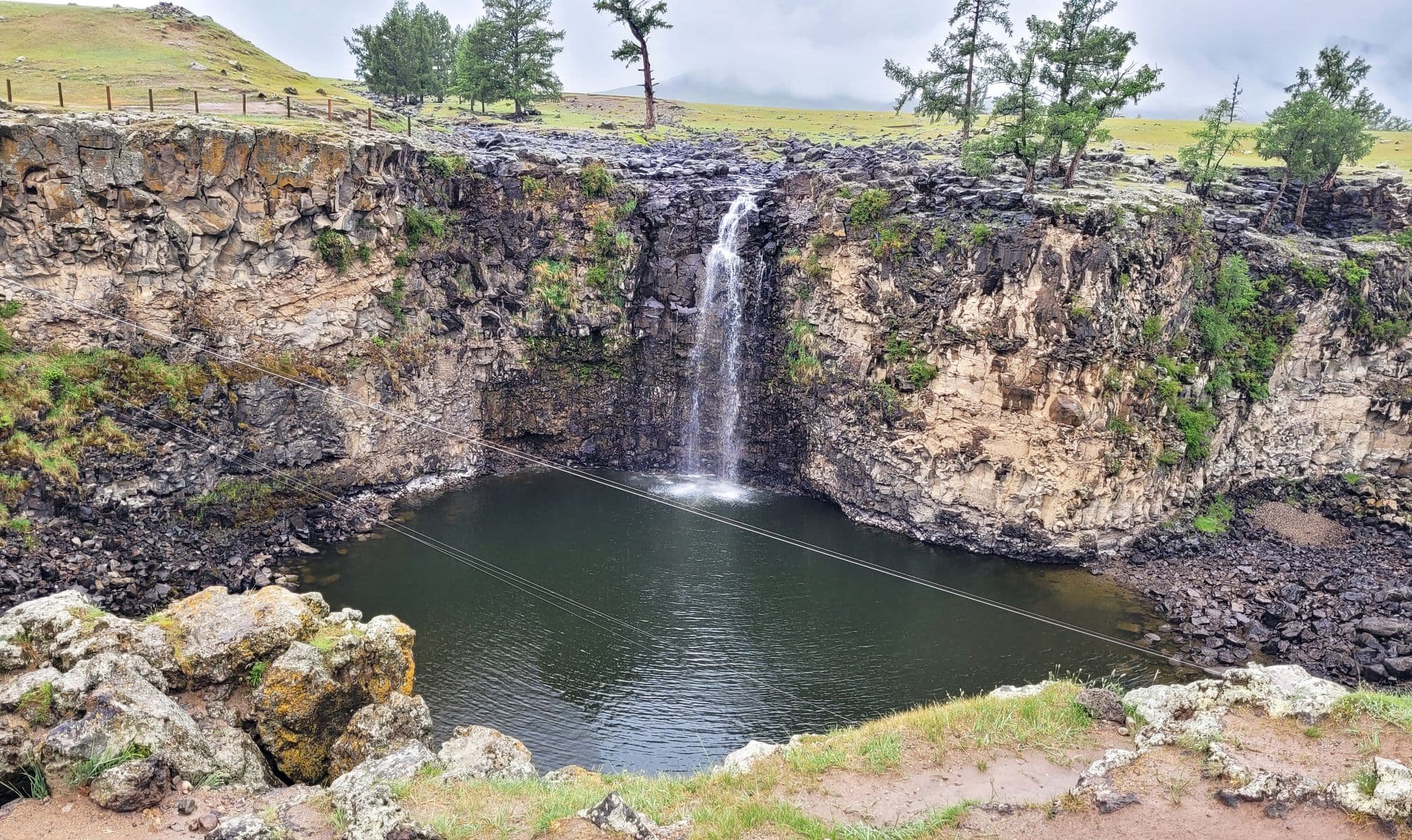
UNESCO inscribed the Orkhon Valley Cultural Landscape in 2004 under criteria (ii), (iii) and (iv): 121,967 hectares with a 61,044-hectare buffer, recognised for more than two thousand years of nomadic pastoral tradition and for the succession of empires that put their capitals along one river. Upstream from Kharkhorin the valley narrows into grassland, basalt and larch, and the place most travellers actually stop is Ulaan Tsutgalan, a 24-metre waterfall where the Ulaan river drops into the Orkhon. Getting there costs most of a day on rough track, which is exactly why the valley still feels like herder country rather than a monument.
- Best months
- Jul–Aug
Elsen Tasarkhai (Mongol Els)
Bulgan · 280 km
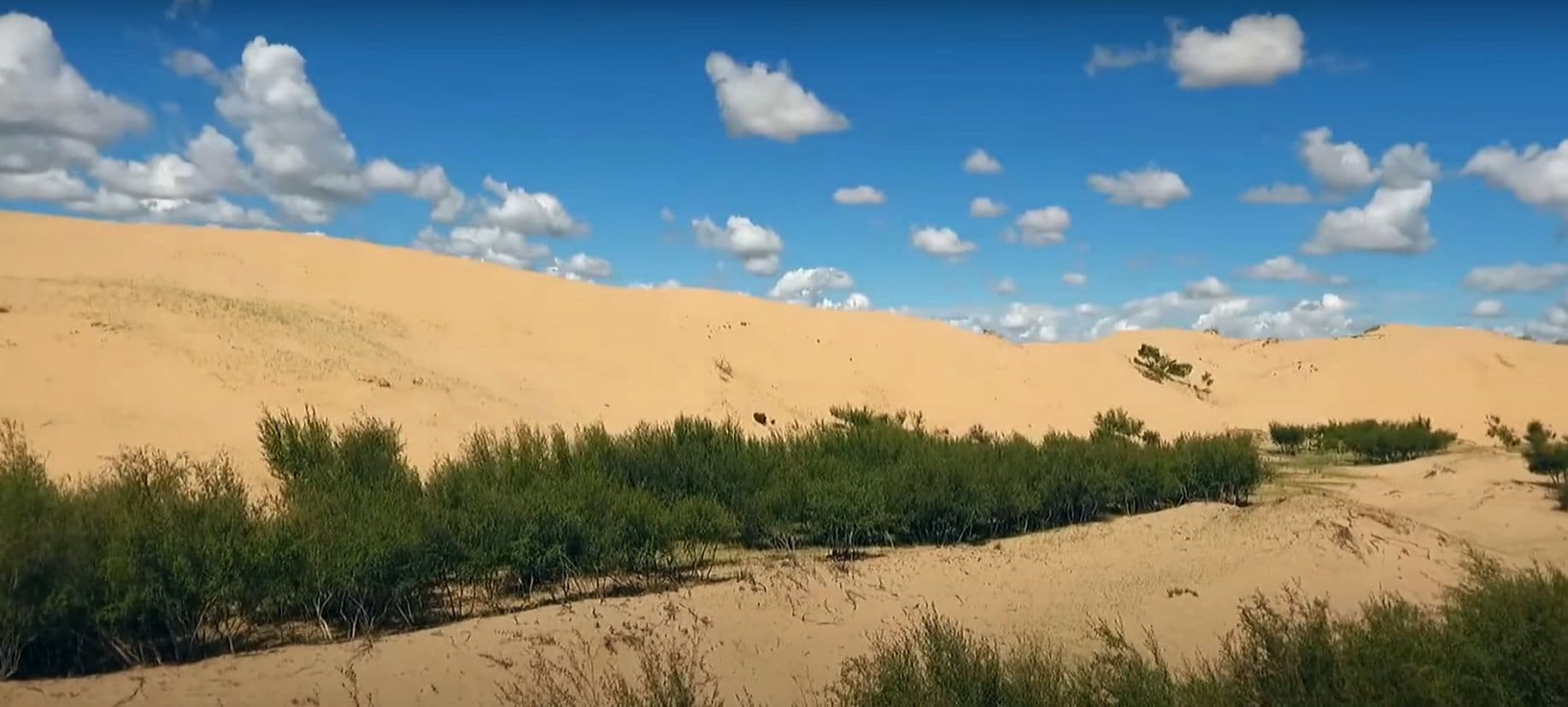
Elsen Tasarkhai is a long ribbon of sand - about 96 km of it - laid across the grassland on the main road west, curving around the western flank of Khugnu Khan mountain. Tour itineraries sell it as a taste of the Gobi without the two-day drive, and the comparison is fair in one way and misleading in another: the dunes are real and you can ride a camel over them at sunset, but the Tarna river runs along their edge and there are willows, saxaul and liquorice growing in the sand. It is the standard overnight between Ulaanbaatar and Kharkhorin.
- Best months
- May–Sep
Ögii Lake
Arkhangai · 340 km
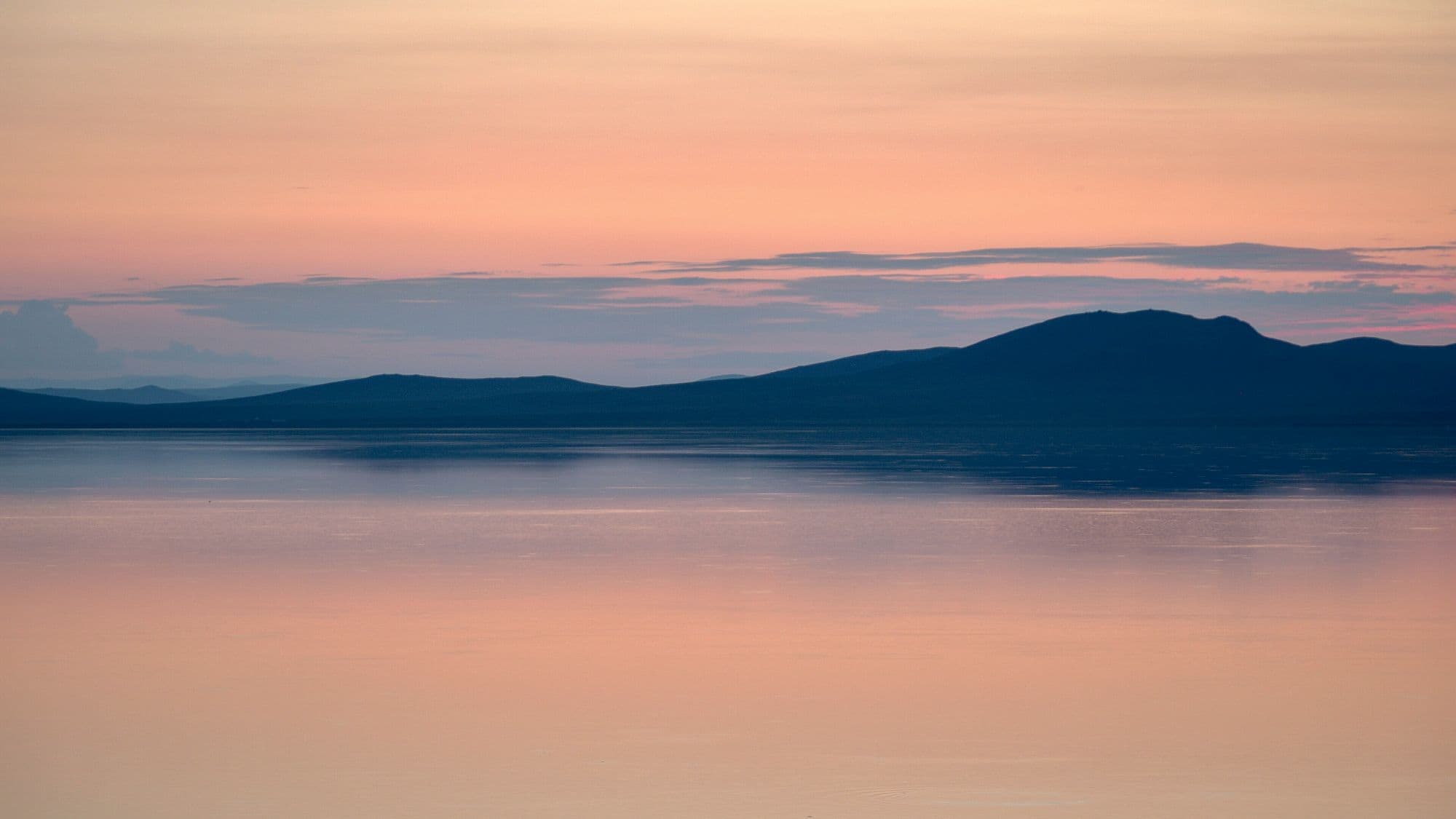
Ögii is a shallow steppe lake of about 25.7 km² at 1,337 metres, fed from the west by the Khögshin Orkhon and drained north-west by the Khooloi into the Orkhon proper. It has been a Ramsar wetland of international importance since 1998 and a BirdLife International Important Bird Area, with around 150 bird species recorded and a well-used migration stopover for ducks, geese and swans. Mongolians come for the fishing. For travellers it is the easiest lake to bolt onto a Kharkhorin trip - a warm swim, a quiet night and birds on the water at first light, for about half a day's detour.
- Best months
- Jun–Sep
Tsenkher Hot Springs
Arkhangai · 470 km
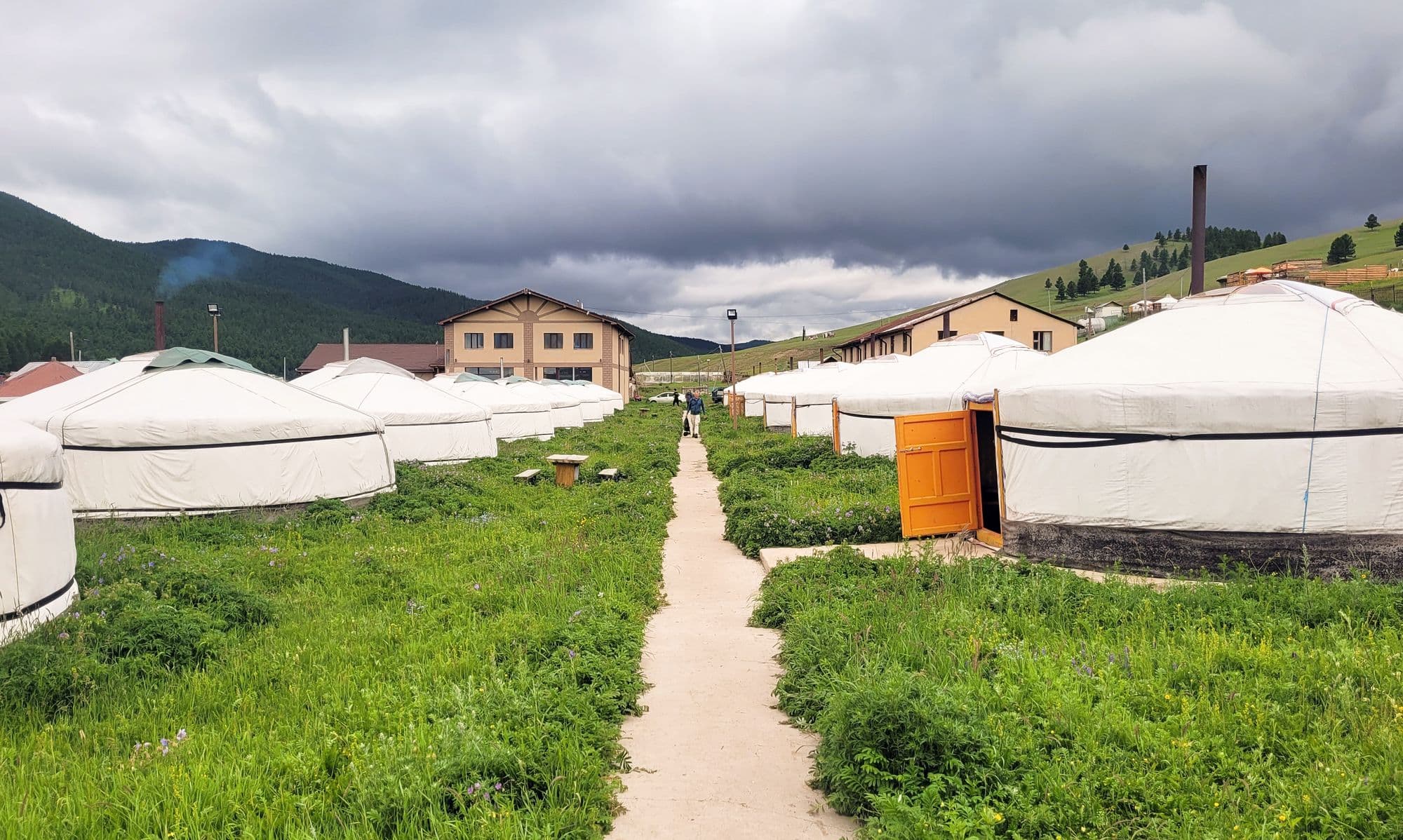
In a larch-edged side valley in Tsenkher sum, a handful of resort ger camps have been built around hot mineral water piped into open-air stone pools. There is nothing ancient or hidden about it - this is Mongolia's spa stop, and its job is obvious after three or four days of dirt roads and cold-water washes. You soak outdoors at about 1,770 metres with the valley walls above you, and on a clear night the steam and the stars do most of the work. Most people arrive from Kharkhorin and leave toward the Khangai lakes the next morning.
- Best months
- Jun–Sep